
Hi, I'm Keisuke Tanaka. I live in San Diego.
Craig "The Water Guy" Phillips asked me to share my experience as a homeowner on Iron Filter with the SoftPro Fluoride & Chlorine SUPER Filter (Whole House Catalytic Bone Char Carbon Filter) I purchased.
This is how my adventures played out. I hope this helps you in your decision.
Did you know that the average American household consumes over 300 gallons of water daily, yet most of us have no idea what's actually in that water flowing from our taps?
I sure didn't—until my family started experiencing issues that I never connected to our water quality. My wife complained about her hair feeling dry and brittle after showers, our coffee had an odd aftertaste that no amount of premium beans could mask, and I noticed our white clothes were developing a dingy, yellowish tint despite using quality detergent.
Living in San Diego, I assumed our municipal water was fine. After all, it's a major city with modern infrastructure, right?
Wrong. Dead wrong.
What started as minor annoyances gradually became daily frustrations that affected our entire household's quality of life. Eight months ago, I made the decision to install the SoftPro Fluoride & Chlorine SUPER Filter—a whole house catalytic and bone char carbon filtration system—and it completely transformed our water experience.
This isn't a quick, surface-level review. I'm going to share every detail of my journey: the problems that drove me to research water filtration, the overwhelming decision process, the installation challenges, real performance data I've collected, and honest assessments of both the benefits and limitations I've discovered through daily use.
The Water Problems That Changed Everything
Before diving into the solution, let me paint a clear picture of what we were dealing with. These weren't dramatic, obvious issues—they were the kind of gradual problems that sneak up on you over months and years.
Our water in San Diego comes from a combination of sources: local surface water from reservoirs, imported water from Northern California and the Colorado River, and groundwater. While the San Diego County Water Authority does an excellent job meeting EPA standards, there are still issues that standard municipal treatment doesn't fully address.
The taste and odor problems were the first red flags.
I'm a coffee enthusiast, and I started noticing that even with freshly roasted, high-quality beans, my morning brew had an underlying chemical taste that I couldn't shake. Initially, I blamed it on the coffee maker or thought maybe I was losing my taste buds as I got older. But when guests started commenting on the "pool water" smell when they turned on our kitchen faucet, I realized the problem wasn't in my head.
The chlorine smell was particularly noticeable first thing in the morning or after we'd been away for a weekend. It wasn't overwhelming, but it was definitely present—that distinct chemical odor that reminded me of public swimming pools.
Then came the skin and hair issues.
My wife, Sarah, started complaining that her skin felt tight and itchy after showers. She's always had sensitive skin, but this was new. Her hair, which had always been her pride and joy, started looking dull and feeling rough to the touch. We initially attributed it to stress or seasonal changes, but when our teenage daughter started experiencing similar issues, we knew something environmental was at play.
I began researching the connection between chlorine and skin irritation. What I learned was eye-opening: chlorine and chloramines, which are used as disinfectants in municipal water treatment, can strip natural oils from skin and hair. For people with sensitivities, daily exposure through showers and baths can cause cumulative irritation.
The laundry situation became the final straw.
Our white linens and clothing were gradually developing a dingy appearance despite careful washing. I thought we needed a new washing machine or better detergent. But research revealed that chlorine can actually break down fabric fibers over time and react with organic compounds in clothing, leading to premature wear and discoloration.
Beyond these obvious issues, I started learning about contaminants that you can't see, smell, or taste but might still be present. San Diego's water, like many municipal supplies, can contain trace amounts of fluoride (added for dental health but controversial for other reasons), various industrial chemicals, pharmaceutical residues, and agricultural runoff from upstream sources.
The more I researched, the more I realized that "meeting EPA standards" doesn't necessarily mean "perfect for every household's needs." EPA standards are set for safety, not necessarily for optimal taste, odor, or comfort.
Research Journey: From Overwhelmed to Educated
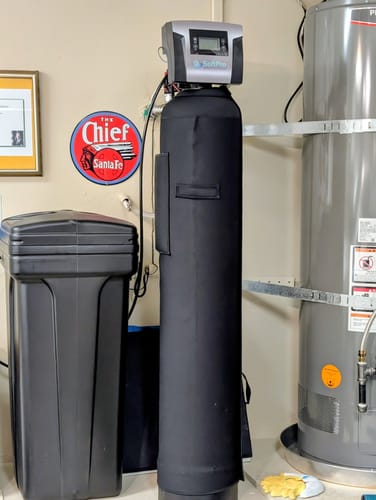
Once I committed to solving our water quality issues, I dove headfirst into research. And let me tell you—the world of water filtration is incredibly complex and often contradictory.
I started with basic online research, which quickly became overwhelming. There are dozens of different filtration technologies: activated carbon, reverse osmosis, ion exchange, UV sterilization, distillation, catalytic carbon, bone char, ceramic filters, and more. Each technology targets different contaminants, has different maintenance requirements, and comes with different price points.
My first decision point was whole house versus point-of-use filtration.
Point-of-use systems, like under-sink filters or countertop units, are less expensive and easier to install. But they only treat water at specific locations—usually just drinking water. Since our issues included showering, laundry, and general household use, I determined we needed a whole house solution.
Whole house systems treat all water entering your home, but they're significantly more expensive and complex to install. They also require more maintenance and ongoing operational costs. However, for our situation, protecting every water outlet in the house seemed essential.
Next, I had to understand the different approaches to whole house filtration.
Traditional activated carbon filters are the most common. They're effective at removing chlorine, improving taste and odor, and capturing many organic compounds. However, standard granular activated carbon has limitations with certain contaminants and can channel (where water finds pathways through the media without proper contact time).
Reverse osmosis systems are incredibly effective at removing virtually everything from water, but they're expensive, waste significant amounts of water, remove beneficial minerals, and typically have low flow rates that make them impractical for whole house applications.
Catalytic carbon represents an advanced form of activated carbon that's been treated to enhance its ability to remove chloramines (chlorine ammonia compounds that many water utilities now use because they're more stable than straight chlorine). This was important because San Diego, like many cities, uses chloramines rather than just chlorine for disinfection.
Bone char carbon was a technology I'd never heard of before my research. Made from animal bones that are carbonized and activated, bone char is particularly effective at removing fluoride, heavy metals, and certain organic compounds that regular activated carbon can't handle as well. It also has a unique pore structure that provides excellent contact time with water.
The certification rabbit hole nearly broke my brain.
I learned about NSF (National Sanitation Foundation) standards, WQA (Water Quality Association) certifications, and various performance testing protocols. NSF/ANSI Standard 42 covers aesthetic effects like taste and odor. Standard 53 covers health effects and contaminant reduction. Standard 61 covers materials safety.
I spent hours reading certification documents and performance data sheets, trying to understand flow rates, pressure drops, contaminant reduction percentages, and capacity ratings. It was incredibly technical, but I wanted to make an informed decision based on actual performance data rather than marketing claims.
Budget became a major consideration.
Quality whole house systems range from $1,500 to $5,000 for the initial purchase, plus installation costs, plus ongoing operational expenses. I had to balance effectiveness with affordability while considering long-term costs.
Cheaper systems often use lower-grade media, have shorter lifespans, require more frequent maintenance, or don't address the full spectrum of contaminants. More expensive systems might include features we didn't need or use technologies that were overkill for our water quality issues.
After weeks of research, comparing dozens of systems, and even testing our water to better understand what we were dealing with, I narrowed my focus to catalytic and bone char carbon combination systems. They offered the best balance of effectiveness for our specific issues, reasonable ongoing costs, and proven performance data.
Why I Chose the SoftPro Catalytic Bone Char System
After evaluating numerous options, the SoftPro Fluoride & Chlorine SUPER Filter stood out for several specific reasons that aligned with our household's needs and my research criteria.
The dual media approach was the primary selling point.
Most systems use either catalytic carbon OR bone char, but not both. SoftPro's design combines both media types in a single tank with a specific layering strategy. The catalytic carbon handles chlorine, chloramines, taste, and odor issues, while the bone char targets fluoride, heavy metals, and certain organic compounds that standard carbon can't effectively remove.
This combination meant I wouldn't need multiple tanks or systems to address our various water quality concerns. It was a comprehensive solution in a single unit.
The flow rate and pressure specifications met our household needs.
Our household of four requires approximately 8-12 GPM (gallons per minute) during peak usage times—simultaneous showers, dishwasher, and washing machine operation. Many whole house filters create significant pressure drops that can make showers feel weak or cause appliances to underperform.
SoftPro's system is rated for up to 15 GPM with minimal pressure loss when properly sized. The 1.5 cubic feet of media provides sufficient contact time even at higher flow rates, ensuring effective contaminant removal without sacrificing performance.
The backwash and regeneration system impressed me.
Unlike simple carbon filters that you replace when exhausted, this system includes an automated backwash feature. Every few days, the system reverses flow and flushes accumulated sediment and contaminants from the media bed. This extends media life, maintains consistent performance, and reduces ongoing maintenance requirements.
The programmable control valve allows customization of backwash frequency based on water usage and quality. In our case, I set it for every 3 days initially, which has proven optimal for our usage patterns.
NSF certification and performance data provided confidence.
The system carries multiple NSF certifications: NSF/ANSI 42 for chlorine reduction and aesthetic effects, and NSF/ANSI 61 for materials safety. While not every component is NSF 53 certified (which covers specific health-effect contaminants), the individual media types have extensive testing data for the contaminants I was targeting.
SoftPro provided detailed performance sheets showing chlorine reduction >95%, chloramine reduction >90%, and significant fluoride reduction when using the bone char component. These weren't vague marketing claims but specific, tested performance metrics.
The company's reputation and support structure mattered.
SoftPro has been in the water treatment business for over 30 years, specializing in residential applications. They manufacture their own systems rather than just rebranding generic units. Their technical support team could answer specific questions about media specifications, installation requirements, and performance expectations.
The warranty coverage was comprehensive: 10 years on the tank and control valve, with clearly defined terms for what's covered and what isn't. The company also provides ongoing technical support and maintains parts availability for their systems.
Installation flexibility was a practical consideration.
The system can be installed indoors or outdoors (with weather protection), requires standard plumbing connections, and includes a bypass valve for maintenance or emergencies. The footprint (approximately 13" diameter by 54" tall) would fit in our utility room without major modifications.
SoftPro provides detailed installation manuals and supports both DIY installation and professional installation. They maintain a network of certified installers but don't require professional installation to maintain warranty coverage, provided the installation follows their specifications.
Unboxing and First Impressions

The system arrived via freight delivery, which was my first indication of its substantial build quality. The total weight was approximately 150 pounds, with the main tank making up most of that mass once filled with media.
The packaging was clearly designed for protection during shipping.
Everything arrived in perfect condition, with the main tank wrapped in protective plastic and secured in a custom cardboard frame. The control valve was separately packaged to prevent damage during transit. All plumbing fittings, bypass valve components, and installation hardware were organized in labeled bags.
The documentation impressed me immediately. Instead of a single folded sheet with tiny diagrams, SoftPro provided a comprehensive installation manual with clear photographs, detailed diagrams, and troubleshooting guides. They also included a programming guide for the control valve and a maintenance schedule.
The tank construction exceeded my expectations.
The main tank is constructed from filament-wound fiberglass with a polyethylene liner—significantly more robust than the basic plastic tanks used in many residential systems. The finish is clean and professional-looking, not like some industrial equipment that you'd want to hide in a basement.
The control valve assembly felt solid and well-engineered. It's a Fleck 5600SXT valve, which is an industry-standard component known for reliability. The digital display was clear and intuitive, and the programming buttons had good tactile feedback.
Pre-installation inspection revealed thoughtful design details.
The tank includes a built-in distributor tube that ensures proper water flow through the media bed. The riser tube and tank fittings are all standard sizes, meaning replacement parts will be available from multiple sources if needed in the future.
The bypass valve assembly was particularly well-designed, with clear flow direction markings and quality ball valves that operate smoothly. This would allow easy system isolation for maintenance without interrupting water supply to the house.
I did notice that the system comes pre-loaded with media, which saved installation time but made the initial handling quite heavy. The media combination includes approximately 1.0 cubic feet of catalytic carbon and 0.5 cubic feet of bone char, layered to optimize contact time and filtration effectiveness.
Installation Experience and Setup
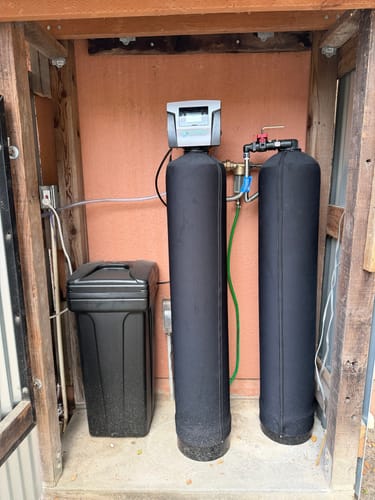
I decided to tackle the installation myself, partly to save money and partly because I wanted to fully understand how the system worked. This decision taught me a lot about the system but also presented some challenges I hadn't anticipated.
Pre-installation preparation took longer than expected.
Our main water line enters the house in the utility room and immediately branches to the water heater and cold water distribution. I needed to install the system after the main shutoff but before the water heater to ensure all household water would be filtered.
This required relocating some existing plumbing and installing new shutoff valves on both sides of the system. I also needed to run a drain line for the backwash discharge—something I hadn't fully considered during planning. The control valve requires 120V power, so I had an electrician install a dedicated outlet.
Space planning was crucial. The system needs clearance above the tank for future media replacement, and the control valve needs to be accessible for programming and maintenance. I ended up rebuilding a section of utility shelving to accommodate everything properly.
The actual installation was straightforward but physically demanding.
Moving and positioning a 150-pound tank in a confined utility room required help from a neighbor and some creative maneuvering. Once positioned, the plumbing connections were standard 1" NPT fittings that any competent DIYer can handle.
The bypass valve installation was more complex than expected. SoftPro provides a pre-assembled bypass, but integrating it with existing plumbing required careful measurement and multiple trips to the hardware store for additional fittings.
I chose to use flexible stainless steel connectors rather than rigid copper for the final connections. This added about $50 to the installation cost but made alignment much easier and provides some vibration isolation during backwash cycles.
Initial startup and programming revealed the system's sophistication.
The control valve programming was more involved than I expected. You can set backwash frequency based on time, gallons processed, or a combination of both. You can also adjust backwash duration, rinse time, and service flow direction.
I started with SoftPro's recommended settings: backwash every 3 days or 1,000 gallons, whichever comes first, with a 10-minute backwash cycle and 5-minute rinse. These settings can be fine-tuned based on actual water usage and quality observations.
The first backwash cycle was quite educational. The system automatically switches to backwash mode, during which you temporarily lose water pressure throughout the house. The cycle lasted about 15 minutes total, and I could hear the control valve cycling through different phases.
Initial water quality observations were immediately noticeable.
Within hours of startup, the chlorine odor that had been present in our water was completely eliminated. The taste improvement was dramatic—water from every tap in the house tasted clean and fresh, with no chemical aftertaste.
That first shower was revelatory. The water felt noticeably softer, though this system doesn't remove hardness minerals like a traditional water softener. Instead, the removal of chlorine and chloramines made the water feel less harsh and drying to skin and hair.
I did notice a slight pressure drop during high-demand situations, but it was minimal—maybe 5-8 PSI reduction compared to unfiltered water. This was well within acceptable limits and didn't affect appliance performance or shower satisfaction.
Performance Testing and Real-World Results
Being naturally analytical, I wanted to document actual performance rather than relying on subjective impressions. Over the past eight months, I've conducted various tests and maintained detailed records of system performance.
Chlorine and chloramine elimination has been consistently excellent.
I purchased a digital chlorine test kit to measure both free chlorine and total chlorine (which includes chloramines). Our municipal water typically contains 1.5-2.5 ppm total chlorine, depending on seasonal demand and source water conditions.
Post-filtration measurements consistently show zero detectable chlorine or chloramines at every tap in the house. I've tested monthly since installation, and the system has maintained this level of performance without any degradation.
The taste and odor elimination has been equally impressive. That chemical taste in coffee and cooking water disappeared immediately and hasn't returned. Guests consistently comment on how good our https://qualitywatertreatment.com/products/whole-house-upflow-catalytic-bone-char-carbon-water-filter water tastes, especially those who live in areas with heavily chlorinated municipal supplies.
Fluoride reduction testing revealed interesting results.
San Diego's water contains approximately 0.7 ppm fluoride, which is within the optimal range recommended for dental health. I wasn't trying to eliminate fluoride entirely but wanted to reduce it for family members who prefer lower levels.
Using fluoride test strips, I measured approximately 50-60% reduction in fluoride levels—bringing our water from 0.7 ppm down to 0.3-0.4 ppm. This level of reduction is consistent with bone char performance data and meets our household's preferences without eliminating fluoride entirely.
Flow rate and pressure performance has exceeded expectations.
I installed pressure gauges before and after the system to monitor any changes over time. Initially, I measured a 6 PSI pressure drop at normal flow rates, increasing to 12 PSI during peak demand periods when multiple fixtures operate simultaneously.
After eight months of operation, these numbers have remained consistent, indicating that the backwash system is effectively preventing media fouling or channeling. Our household water pressure runs 65-70 PSI from the municipal supply, so the slight reduction still provides excellent performance throughout the house.
The impact on household water usage patterns has been interesting to track.
We've actually increased our water consumption slightly—not because the system is wasteful, but because the water tastes so much better that we drink more tap water and make more coffee and tea at home. We've completely eliminated bottled water purchases, which has been both environmentally positive and cost-effective.
The backwash cycle uses approximately 40-50 gallons every three days, which adds about 500 gallons per month to our water bill. At San Diego's tiered water rates, this costs approximately $3-4 monthly—a reasonable operational expense for the benefits provided.
Long-term performance tracking shows consistent effectiveness.
I've maintained a simple log of test results, backwash frequency, and any observations. After eight months, all performance parameters remain within the initial ranges. The system hasn't shown any signs of declining effectiveness or developing operational issues.
The control valve has operated reliably, automatically initiating backwash cycles based on programmed parameters. I've never had to manually trigger a backwash or adjust timing due to performance issues.
Daily Life Impact and Household Changes
The most meaningful measure of any home improvement isn't technical specifications—it's how the change affects daily life and family satisfaction. Eight months of filtered water has created numerous improvements that extend far beyond what I initially expected.
The kitchen experience transformed completely.
Coffee and tea preparation became genuinely enjoyable again. That underlying chemical taste that had been masking the true flavors of quality ingredients disappeared entirely. I found myself actually looking forward to my morning coffee ritual instead of tolerating it.
Cooking with filtered water revealed flavors in soups, pasta, and rice that had been muted by chlorine compounds. My wife, who's an excellent cook, immediately noticed that her homemade bread had better texture and flavor when made with filtered water.
We eliminated bottled water purchases completely. Previously, we were buying 2-3 cases of bottled water monthly for drinking and coffee preparation. At $4-6 per case, this was costing us $100 annually while generating significant plastic waste.
Bathroom and personal care improvements exceeded expectations.
The skin and hair issues that originally motivated this purchase resolved within 2-3 weeks. My wife's hair regained its natural shine and texture, and the dry, itchy skin problems that had been plaguing our family disappeared.
Showers became more pleasant experiences. Water feels noticeably "softer" and more comfortable, even though we haven't removed hardness minerals. The absence of chlorine and chloramines makes a dramatic difference in how water feels on skin.
Our teenage daughter, who had been experiencing some skin sensitivity issues, saw significant improvement. While I can't make medical claims, the correlation between filtered water and reduced skin irritation was unmistakable in our household.
Laundry and household maintenance benefits became apparent over time.
The dingy discoloration that had been affecting our white clothing and linens stopped progressing and gradually improved with subsequent washes. Chlorine's fabric-damaging effects were eliminated, which should extend the life of our clothing and household textiles.
Soap and detergent seem more effective in filtered water. We've been able to reduce the amount of laundry detergent and dishwasher soap we use while achieving better cleaning results. This isn't because the system removes hardness (it doesn't), but because chlorine can interfere with soap effectiveness.
Unexpected benefits emerged over months of use.
Our houseplants seem healthier since we started watering them with filtered water. Chlorine and chloramines can stress plants, particularly sensitive varieties. While this wasn't a consideration during purchase, it's been a pleasant bonus.
Fish tank maintenance became simpler. Previously, we had to use dechlorinating chemicals when changing aquarium water. Now we can use tap water directly, which is more convenient and eliminates the need for chemical additives.
Appliance performance has been subtly but noticeably improved. Our coffee maker, ice maker, and humidifier operate more efficiently and require less frequent cleaning since chlorine and chloramines no longer deposit mineral buildup in their systems.
Family adoption and satisfaction has been universal.
Everyone in our household immediately noticed and appreciated the improvements. There was no adjustment period or learning curve—just immediate, obvious benefits that everyone could taste, feel, and experience.
When relatives visit, they consistently comment on how good our water tastes. Several family members have asked for detailed information about our system because they want to address similar issues in their own homes.
Honest Assessment: Limitations and Considerations
After eight months of daily use, I've identified several limitations and considerations that potential buyers should understand before making this investment.
The system doesn't address all water quality issues.
This is a taste, odor, and chemical reduction system—not a comprehensive water treatment solution. It doesn't remove hardness minerals, so areas with very hard water will still experience soap scum, mineral deposits, and reduced soap effectiveness. You'd need a separate water softener to address those issues.
It doesn't remove biological contaminants like bacteria or viruses. If your water source has microbial contamination concerns, you'd need additional treatment like UV sterilization or disinfection systems.
Heavy metal removal is limited. While bone char does remove some heavy metals, it's not designed for water sources with significant lead, mercury, or other toxic metal contamination. Those situations require specialized treatment approaches.
Installation requirements can be challenging for some homes.
The system requires adequate space, proper drainage for backwash cycles, and 120V electrical power. Homes with limited utility room space, no convenient drain access, or electrical constraints may face significant additional installation costs.
Older homes with galvanized plumbing may need upgrades to accommodate the flow requirements and connections. The system works best with modern plumbing that can handle the flow rates and pressure requirements.
Ongoing maintenance and costs are real considerations.
While the system is largely automatic, it requires attention and periodic maintenance. You need to monitor salt levels for the control valve (if your model uses salt regeneration), track performance, and eventually replace media—typically every 5-7 years depending on usage.
The backwash cycles do use additional water—approximately 15-20% more than your normal consumption. In areas with expensive water rates or drought restrictions, this could be a meaningful cost consideration.
Power outages can disrupt the automatic programming, requiring manual reprogramming of the control valve. This isn't a major issue but requires some technical knowledge to address.
Performance can vary based on incoming water quality.
The system's effectiveness depends significantly on what's in your source water. Areas with extremely high chloramine levels, unusual chemical compounds, or variable municipal treatment may see different results than what I've experienced.
Seasonal variations in municipal water treatment can affect system performance. During periods when utilities increase disinfectant levels or change treatment approaches, you might notice changes in effectiveness or need to adjust backwash frequency.
The initial investment is substantial.
Between the system cost, installation expenses, and any required plumbing modifications, you're looking at $2,000-4,000 total investment. While the long-term value is excellent, the upfront cost can be a barrier for many households.
This isn't a impulse purchase—it requires careful consideration of your specific water quality issues, household needs, and financial priorities.
Professional installation may be necessary for many homeowners.
While I successfully installed our system myself, I have plumbing experience and the necessary tools. Most homeowners would benefit from professional installation, which adds $500-1,000 to the total cost but ensures proper setup and warranty compliance.
Mistakes during DIY installation can be expensive to correct and may void warranty coverage for certain components.
Despite these limitations, I want to emphasize that none of them are deal-breakers for the right household. They're simply factors to consider and plan for when evaluating whether this system meets your specific needs and circumstances.
For our family, the benefits have far outweighed these considerations, and I'd make the same purchase decision again without hesitation.