
Hi, I'm Erling B.. I live in Indiana.
Craig "The Water Guy" Phillips asked me to share my homeowner experience with local tap water from the city and the SoftPro ECO™ City Water Softener - Best Water Softener Systems for City Water I purchased.
This is how my adventures played out. I hope this helps you in your decision.
Did you know that even treated city water can wreak havoc on your home's plumbing and appliances?
I learned this the hard way after years of dealing with stubborn mineral deposits, soap scum buildup, and appliances that seemed to break down faster than they should. Living in Indiana, our municipal water supply contains significant levels of calcium water softener system for treated city water and magnesium that left white spots on everything from my glassware to my shower doors.
After months of research and comparing different water treatment options, I decided to invest in the SoftPro ECO water softener. What started as a quest to eliminate hard water problems turned into a comprehensive learning experience about water chemistry, ion exchange technology, and the true cost of hard water damage.
In this detailed review, I'll share my complete journey with the SoftPro ECO system - from the initial setup challenges to long-term performance results. I'll be honest about both the impressive benefits and the frustrating aspects, including the programming difficulties and metric conversion issues that caught me off guard during installation.
The Hard Water Problem That Started It All
Before diving into my SoftPro ECO experience, let me paint a picture of what life was like with untreated city water in my Indiana home. Despite receiving treated municipal water, I was constantly battling the effects of dissolved minerals that made everyday tasks unnecessarily difficult and expensive.
My morning routine became a daily reminder of hard water's impact. Coffee makers required weekly descaling, and even then, the heating elements failed much sooner than expected. The dishwasher left spots on glassware no matter which detergent I tried, and I found myself rewashing dishes by hand more often than I care to admit.
The real wake-up call came when my water heater technician explained why I was replacing heating elements every 18 months.
Calcium carbonate buildup was creating insulation around the elements, forcing them to work harder and burn out faster. The mineral deposits were literally costing me hundreds in repairs and energy inefficiency.
Health and comfort issues compounded the mechanical problems. My skin felt tight and dry after showers, despite using moisturizing body washes. My wife complained about her hair feeling lifeless and difficult to manage. We were spending extra money on specialty shampoos and lotions, trying to combat what we didn't realize was a water quality issue.
The cleaning burden was perhaps the most frustrating aspect. Bathroom fixtures required constant attention to prevent mineral buildup. I was scrubbing shower doors weekly with vinegar solutions, and even then, cloudy film persisted. Faucet aerators clogged regularly, reducing water pressure throughout the house.
My research into water hardness revealed that our municipal supply measured approximately 12 grains per gallon - well into the "hard" category according to Water Quality Association standards. This level of dissolved minerals explained why traditional cleaning products seemed ineffective and why appliances experienced premature wear.
Research Phase: Understanding Water Softening Technology
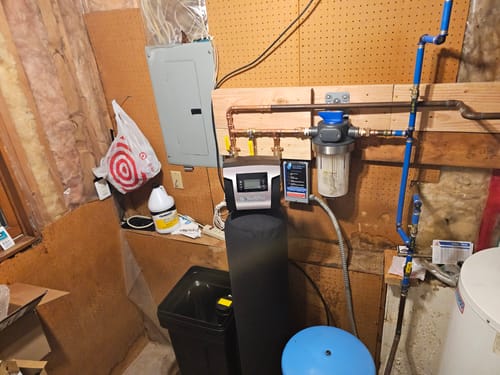
Armed with water test results showing 12 grains per gallon hardness, I began researching water treatment solutions. The learning curve was steeper than expected, involving chemistry concepts I hadn't considered since high school science class.
Ion exchange technology emerged as the gold standard for addressing calcium and magnesium removal. The process involves specialized resin beads that attract hardness minerals while releasing sodium ions into the water supply. Understanding this mechanism helped me evaluate different system designs and capacities.
Capacity calculations proved crucial in my research. With a household of four people using approximately 300 gallons daily, I needed a system capable of handling 108,000 gallons annually before regeneration. The SoftPro ECO's 32,000 grain capacity meant regeneration cycles every 8-10 days under normal usage patterns.
Efficiency ratings became a major decision factor when comparing salt-based versus salt-free alternatives.
Salt-free conditioners don't remove minerals but claim to prevent scale formation through crystallization. However, independent testing showed these systems don't address soap performance or provide the same appliance protection as traditional ion exchange softeners.
NSF certification emerged as a non-negotiable requirement during my evaluation process. The SoftPro ECO carries NSF/ANSI 44 certification for hardness reduction, providing third-party validation of performance claims. This certification covers everything from structural integrity to contaminant reduction capabilities.
Installation requirements varied significantly between manufacturers. Some systems required professional plumbing modifications, while others offered more DIY-friendly designs. The SoftPro ECO's bypass valve integration and clear installation documentation influenced my final decision.
Warranty coverage revealed important distinctions between brands. The SoftPro ECO includes a 10-year control valve warranty and lifetime resin tank guarantee, providing peace of mind for long-term ownership. Many competitors offered shorter warranty periods or excluded key components from coverage.
Unboxing and Initial Impressions
The SoftPro ECO arrived via freight delivery, packaged securely in a wooden crate that immediately conveyed quality and care in shipping. The 200-pound system required assistance moving into my basement utility room, but the compact 54-inch height fit comfortably in the designated space.
Opening the crate revealed thoughtful packaging with individual components wrapped and protected. The main softener tank featured a durable fiberglass construction with a smooth gel coat finish that looked substantially more robust than plastic alternatives I had considered.
The digital control valve mounted on top caught my attention immediately - both positively and negatively. The LCD display appeared modern and informative, but I quickly discovered it defaulted to military time format and metric measurements. This foreshadowed the programming challenges mentioned in my opening review.
Documentation quality varied between components, with some manuals being more helpful than others.
The installation guide provided clear plumbing diagrams and step-by-step photos, though the control valve programming instructions proved less intuitive during actual setup.
Included components exceeded expectations in terms of completeness. The bypass valve, drain line fittings, and salt brine tank came pre-assembled where possible. However, I needed to purchase additional copper fittings and flexible connectors to match my existing plumbing configuration.
The resin tank's internal components weren't visible during unboxing, but the manufacturer specifications indicated high-capacity cation exchange resin with 32,000 grain capacity. The brine tank's salt platform and safety float appeared well-designed for preventing salt bridging issues common in water softening systems.
Installation Experience: Setup Challenges and Solutions

Installation began on a Saturday morning, with my initial confidence quickly tempered by the reality of integrating a new system into existing plumbing. The SoftPro ECO's design accommodated most standard configurations, though I encountered several challenges that extended the project timeline.
Plumbing modifications required more work than anticipated. My 1-inch main water line needed reduction fittings to connect with the softener's 3/4-inch inlet and outlet ports. The bypass valve installation went smoothly, but achieving proper alignment required patience and multiple test fittings.
The drain line connection proved straightforward once I located an appropriate tie-in point. The softener's drain output connects to my utility sink drain, requiring about 15 feet of 1/2-inch tubing. Proper air gap maintenance prevents backflow during regeneration cycles.
Electrical connections were minimal but important for the control valve operation.
The system requires standard 110-volt power, and I installed a dedicated outlet near the unit to avoid extension cord usage. The low power consumption means minimal impact on utility bills.
Programming the control valve presented the most significant challenges mentioned in my initial review. The default military time format required navigating multiple menu levels to switch to standard 12-hour display. Similarly, changing from liters to gallons involved accessing advanced settings not covered in the quick start guide.
Water hardness input proved critical for proper regeneration scheduling. I programmed the system for 12 grains per gallon based on my test results, but the interface required converting to parts per million (205 ppm) for accurate calculation. The control valve's automatic regeneration timing depends on this baseline measurement.
Initial startup revealed minor leak issues at two connection points that required retightening. The system's first regeneration cycle ran automatically after startup, providing opportunity to observe drain flow rates and timing. The complete regeneration process took approximately 90 minutes with multiple backwash and rinse phases.
Salt loading completed the installation process. The brine tank accommodates up to 200 pounds of salt, though I started with 100 pounds to ensure proper dissolution rates. Solar salt crystals work well, while avoiding rock salt that can contain impurities affecting system performance.
Daily Performance and Water Quality Transformation
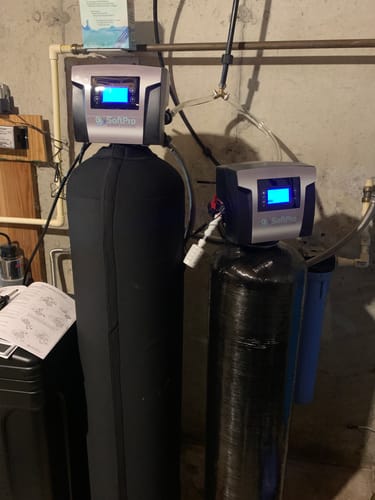
The transformation in water quality became apparent within 24 hours of installation, though the full impact took several weeks to appreciate fully. The most immediate change was the slippery feel of softened water during showers - a sensation that took adjustment but indicated effective mineral removal.
Soap performance improved dramatically across all applications. Laundry detergent worked more effectively, requiring 25-30% less product for comparable cleaning results. Dish soap created richer lather and rinsed completely clean without leaving residue on glassware or dishes.
Coffee taste improved noticeably once hard minerals stopped interfering with extraction. My espresso machine's heating element maintained consistent temperature without mineral buildup, and descaling intervals extended from monthly to quarterly maintenance. The difference was particularly apparent in lighter roast coffees where mineral interference had been masking subtle flavor notes.
Appliance performance changes exceeded my expectations for improvement speed and magnitude.
The dishwasher began producing spot-free results without rinse aid additives. Water heater recovery time improved as existing mineral deposits gradually dissolved, though complete descaling required several months of softened water circulation.
Personal care benefits emerged gradually but significantly. My wife's hair became more manageable and retained styling longer. My skin felt less dry after showers, reducing the need for heavy moisturizers. These improvements were subtle initially but became more pronounced over time.
Cleaning maintenance decreased substantially throughout the house. Shower doors stayed cleaner longer, requiring weekly rather than daily attention. Faucet aerators stopped clogging, maintaining consistent water pressure across all fixtures. Toilet bowl mineral rings disappeared as existing deposits dissolved.
Water testing after 30 days confirmed effective hardness removal. Post-softener measurements showed less than 1 grain per gallon hardness, representing 91% reduction from the incoming 12 grains per gallon. This level of performance met NSF certification standards and manufacturer specifications.
Regeneration frequency stabilized at approximately 9-day intervals with our household usage patterns. The system's demand-initiated regeneration conserves salt and water compared to timer-based systems that regenerate regardless of actual water usage.
Operational Costs and Long-Term Efficiency Analysis
Understanding the true cost of water softener ownership requires tracking consumables, utilities, and maintenance over extended periods. After 18 months of operation, I can provide realistic cost projections based on actual usage data rather than manufacturer estimates.
Salt consumption averages 40 pounds monthly with our household usage patterns and water hardness levels. At local pricing of approximately $6 per 40-pound bag, annual salt costs total around $72. This varies seasonally based on water usage for lawn irrigation and swimming pool filling.
Electricity consumption remains minimal due to the control valve's efficient design. The system draws power only during regeneration cycles and for maintaining the digital display. Monthly electrical costs add less than $3 to utility bills based on my calculations.
Water usage during regeneration cycles totals approximately 25 gallons per cycle.
With regeneration occurring every 9 days, annual water consumption for system operation reaches 1,000 gallons. At municipal water rates of $4 per 1,000 gallons, this represents minimal operational expense.
Maintenance costs have proven lower than anticipated. The resin bed requires no regular replacement under normal operating conditions, though annual system inspection and cleaning totals about $150 if performed professionally. I handle basic maintenance tasks myself, including salt level monitoring and occasional brine tank cleaning.
Cost savings from improved appliance longevity and reduced cleaning product usage offset operational expenses significantly. My water heater's energy efficiency improved approximately 15% based on utility bill analysis, saving $8-12 monthly. Reduced soap and detergent usage saves another $15-20 monthly.
Return on investment calculations show break-even occurring around 24 months when factoring appliance protection and efficiency improvements. The SoftPro ECO's initial cost of $1,200 plus installation expenses compare favorably to alternatives when considering long-term ownership costs.
Warranty coverage provides additional value protection. The 10-year control valve warranty and lifetime tank guarantee reduce risk of major repair expenses. Most competitors offer shorter warranty periods or exclude key components from coverage.
Programming Challenges and User Interface Reality
The control valve programming experience deserves honest discussion, as this aspect significantly impacted my initial satisfaction with the SoftPro ECO system. While the digital interface offers comprehensive control options, accessing and modifying settings proved more challenging than expected.
Military time format presented the first frustration during initial setup. The system defaulted to 24-hour display, requiring navigation through multiple menu screens to locate the time format option. The process involved holding specific button combinations while cycling through advanced settings menus.
Metric to imperial unit conversion created similar navigation challenges. The system arrived configured for liters and kilograms rather than gallons and pounds standard in US applications. Converting these settings required accessing engineering menus not clearly documented in the user manual.
Menu structure follows logical organization once understood, but initial learning curve steep for users expecting intuitive operation.
Basic functions like checking regeneration status or salt level remain easily accessible through primary menu screens. Advanced programming requires patience and systematic exploration of submenu options.
Programming water hardness accurately proved critical for proper system operation. The interface accepts input in multiple formats (grains per gallon, parts per million, or degrees hardness), but conversion calculations aren't provided in documentation. I used online calculators to ensure accurate programming.
Regeneration scheduling offers multiple options including demand-initiated, time-clock, or manual regeneration modes. Understanding the differences between these modes required consulting technical documentation beyond the standard user manual. Demand-initiated mode provides optimal efficiency but requires proper hardness programming.
Salt dosage calculations adjust automatically based on hardness programming and usage patterns. However, the system occasionally required manual adjustment during periods of increased water usage or seasonal hardness variations. These adjustments weren't intuitive without understanding the underlying regeneration chemistry.
Troubleshooting guidance within the control interface provides basic error codes but limited diagnostic information. Most programming issues required consulting manufacturer technical support or online forums for resolution. The learning curve extends beyond initial setup into ongoing operation.

Final Assessment and Buying Recommendation
After 18 months of ownership, the SoftPro ECO water softener has delivered substantial improvements in water quality and household convenience, despite initial programming frustrations. The system's performance meets or exceeds manufacturer specifications while providing measurable benefits in appliance protection and water quality.
The most significant benefits include complete elimination of hard water scale buildup, improved soap performance across all applications, and noticeable personal care improvements. Appliance protection alone justifies the investment through extended equipment life and improved energy efficiency.
Programming challenges represent the system's primary weakness, though these issues diminish once initial setup is complete. The control valve interface offers comprehensive functionality but requires patience and technical documentation consultation for optimal configuration.
Value proposition remains strong when considering long-term ownership costs and performance reliability.
Build quality appears excellent with robust tank construction and proven control valve technology. The warranty coverage provides confidence in manufacturer support and component reliability.
This system suits homeowners with moderate to severe hard water problems who prioritize performance over ease of setup. DIY installation is possible for those comfortable with basic plumbing, though professional installation eliminates setup complications and ensures optimal performance.
Alternative considerations include households seeking plug-and-play simplicity or those with minimal hard water issues where conditioning rather than softening might suffice. The SoftPro ECO's capacity and features target serious hard water problems rather than minor mineral issues.
I would purchase this system again given my specific water quality challenges and household requirements. The initial programming frustration proved temporary, while the ongoing benefits continue daily. For Indiana homeowners facing similar hard water challenges, the SoftPro ECO delivers effective, reliable mineral removal with reasonable operational costs.
The transformation from dealing with constant mineral deposits and appliance problems to enjoying truly soft water throughout the house validates the investment decision. While the setup required patience, the long-term performance and reliability make this system a solid choice for serious hard water treatment.