
Hi, I'm Lorenzo Garrett. I live in Pennsylvania. Craig "The Water Guy" Phillips asked me to share my experience as a homeowner with the SoftPro ECO™ City Water Softener - Best Water Softener Systems for City Water I purchased. This is how my adventures played out. I hope this helps you in your decision.
Did you know that even treated city water can wreak havoc on your home's plumbing and appliances?
I learned this the hard way last year when I noticed my dishwasher was leaving spots on everything, my coffee maker needed descaling every few weeks, and my wife started complaining about her hair feeling "weird" after showers.
The white, chalky buildup around our faucets was getting embarrassing, especially when we had company over. I initially thought this was just normal wear and tear, but after talking to my neighbor who's a plumber, I realized we had a hard water problem that was costing us money and frustration every single day.
After six months of living with the SoftPro ECO water softener, I can honestly say it has exceeded my expectations in ways I didn't even anticipate. This review covers everything from the initial installation nightmare I thought I'd face (spoiler alert: it wasn't) to the monthly operating costs and the subtle but significant changes we've experienced in our daily routines.

The Hard Water Problem That Drove Me to Action
Living in Pennsylvania, I assumed our municipal water treatment meant we had "good" water. I was wrong about what that actually meant for household use.
The first sign something was off came from our dishwasher. Despite using rinse aid and expensive detergent pods, our glassware came out looking cloudy and spotted. I spent countless Saturday afternoons hand-drying and polishing glasses that should have been sparkling clean.
But the real wake-up call came when our water heater started making strange noises. The service technician who came to inspect it showed me the mineral buildup inside the tank and explained that our 15 grain per gallon hardness level was significantly reducing the efficiency and lifespan of all our water-using appliances.
The calcium and magnesium minerals in our city water were creating scale deposits throughout our plumbing system. Our showerheads required monthly vinegar soaks to maintain decent pressure, and I was replacing the aerators on our kitchen faucet every few months because https://www.softprowatersystems.com/collections/water-softeners-for-city-water they'd get completely clogged with white, crusty buildup.
My wife Sarah started mentioning that her skin felt dry and itchy after showers, and our laundry detergent wasn't performing as well as it should. Clothes that should have been bright and soft were coming out of the wash looking dingy and feeling rough.
The financial impact was becoming clear too. We were using nearly double the recommended amount of laundry detergent to get decent cleaning results. Our soap and shampoo consumption had increased because hard water prevents proper lathering. Most concerning was the potential damage to our water heater, dishwasher, and washing machine - appliances that represent thousands of dollars in replacement costs.
I calculated that between the extra cleaning products, increased energy costs from inefficient appliances, and the potential for premature appliance replacement, we were looking at hundreds of dollars per year in hard water-related expenses.
Research Phase - Why I Chose the SoftPro ECO
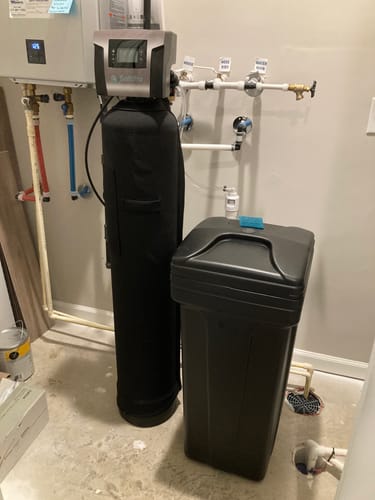
Once I decided we needed a water softener, I spent weeks researching different technologies and brands. The learning curve was steeper than I expected.
Initially, I considered salt-free "conditioners" because they seemed lower maintenance. However, after reading about their limitations with Pennsylvania's mineral content levels, I realized we needed a true ion exchange system that would actually remove the hardness minerals, not just alter their structure.
The SoftPro ECO caught my attention because of its demand-initiated regeneration system. Unlike timer-based softeners that regenerate on a schedule regardless of actual water usage, this system monitors water consumption and only regenerates when necessary. For our household of four with varying water usage patterns, this efficiency appealed to both my environmental consciousness and my wallet.
The digital metering head was another deciding factor. I wanted real-time feedback about system performance, salt levels, and regeneration cycles. Too many softeners operate as "black boxes" where you don't know if they're working properly until you notice hard water symptoms returning.
Capacity-wise, the 48,000 grain capacity matched perfectly with our calculated needs. With 15 gpg hardness and approximately 300 gallons of daily water usage, the math worked out to regeneration cycles every 8-10 days, which seemed optimal for salt efficiency and consistent performance.
The high-efficiency resin was worth the extra cost. Traditional resin requires more salt and water for regeneration, whereas the fine mesh resin in the ECO system uses approximately 30% less salt per regeneration cycle. Over the system's lifespan, this translates to significant savings in operating costs.
NSF certification was non-negotiable for me. The SoftPro ECO carries NSF/ANSI 44 certification for performance claims and NSF/ANSI 61 for material safety, ensuring that the system actually does what it claims and doesn't introduce harmful substances into our drinking water.
Unboxing and Initial Impressions
The SoftPro ECO arrived on a freight truck, which I should have expected given its size and weight. The delivery driver helped me get it into the garage, where I could inspect everything before installation.
The packaging was industrial-grade and everything arrived in perfect condition. The main tank is substantial - about 44 inches tall and 10 inches in diameter. The fiberglass construction feels solid and premium compared to the plastic tanks I'd seen on some competing models.
What impressed me immediately was the quality of the digital control head. The display is clear and bright, with an intuitive interface that doesn't require constant reference to the manual. The buttons have a solid, responsive feel rather than the cheap, mushy buttons I've experienced on other appliances.
The installation manual was comprehensive without being overwhelming. Clear diagrams showed both DIY and professional installation scenarios, with honest assessments of skill levels required for different approaches. I appreciated that they didn't oversell the "easy installation" aspect - this is a substantial piece of equipment that requires proper planning and execution.

All the necessary fittings and bypass valve components were included. The bypass valve assembly is well-engineered with clear flow direction indicators and solid brass construction. This attention to detail in the included components suggested good overall system quality.
The salt efficiency programming options were more sophisticated than I expected. Rather than just setting a simple hardness level, the system allows for detailed customization based on iron content, total dissolved solids, and specific usage patterns. This granular control meant I could optimize performance for our exact water conditions rather than relying on generic factory settings.
Installation Experience - Easier Than Expected

I had initially planned to hire a plumber for installation, but after reviewing the process and measuring our utility room space, I decided to tackle it myself with help from my brother-in-law who has more plumbing experience.
The most challenging part was finding the optimal location. The system needed to be after the main water line entry but before the water heater, with adequate space for the bypass valve operation and future maintenance access. We also needed a drain connection for the regeneration discharge and a 110V electrical outlet for the control head.
Our installation required cutting into the main water line and installing the bypass valve assembly. The pre-manufactured bypass valve made this much easier than creating a custom bypass system. The threaded connections were standard 1-inch NPT, which simplified the plumbing integration.
Programming the initial settings took about 20 minutes. The control head walked me through entering our water hardness level (15 grains), iron content (0.3 ppm based on our water test), and household size. The system calculated optimal regeneration parameters automatically, though I could have fine-tuned these settings manually if needed.
The first regeneration cycle ran automatically after installation to prepare the resin bed. This process took about 90 minutes and used approximately 65 gallons of water plus about 8 pounds of salt. The control head displayed each phase of the regeneration process, which helped me understand the system operation and verify everything was working correctly.
Initial salt loading required about 200 pounds of solar salt in the brine tank. The tank holds up to 300 pounds, but starting with a partial load allows you to monitor consumption rates and adjust as needed. I chose solar salt over rock salt for its purity and reduced maintenance requirements.
Daily Performance and Real-World Results
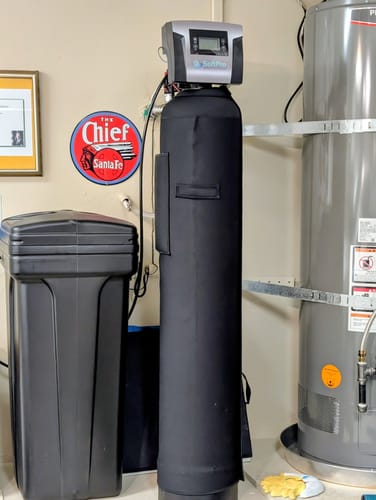
The transformation in our water quality was noticeable within 24 hours of installation. The most immediate difference was in our shower experience - soap and shampoo started lathering properly again, and that slippery feeling of soft water took some getting used to.
Our dishwasher performance improved dramatically. Glassware now comes out spot-free without rinse aid, and we've been able to reduce our detergent usage by about 40% while achieving better cleaning results. The white film that used to coat our dishes is completely gone.
**Coffee quality improved noticeably.** The mineral buildup that was affecting taste is eliminated, and our coffee maker no longer needs monthly descaling treatments. Sarah mentioned that tea tastes cleaner too, without the slight metallic aftertaste we'd grown accustomed to.
Laundry results have been impressive. We've cut our detergent usage in half and clothes are coming out brighter and feeling softer. Whites stay whiter longer, and colors seem more vibrant. The rough, scratchy feeling that hard water minerals caused in our cotton towels is completely gone.
**Cleaning efficiency throughout the house has improved.** Bathroom cleaning takes significantly less time because soap scum formation has decreased dramatically. Our glass shower doors stay cleaner longer, and the weekly vinegar treatments for showerheads are no longer necessary.
The system regenerates approximately every 9 days with our current usage patterns, which matches the projected calculations perfectly. Each regeneration uses about 7-8 pounds of salt and runs during the pre-programmed 2:00 AM time slot, so it never interferes with our daily water usage.
Water pressure throughout the house has remained consistent. I was concerned that the softener might cause pressure drops, but flow rates at all fixtures are unchanged from pre-installation levels. The system is sized appropriately for our home's plumbing capacity.
**Appliance efficiency improvements are becoming apparent.** Our water heater seems to be heating more efficiently - hot water recovery time has improved and the strange noises from mineral buildup have stopped. While it's too early to measure energy savings precisely, the improvement in heat transfer efficiency is noticeable.
Operating Costs and Efficiency Analysis
After six months of operation, I've tracked our actual operating costs carefully to understand the true investment we're making in water treatment.
**Salt consumption averages 24-26 pounds per month.** At current solar salt prices of approximately $6 per 40-pound bag, our monthly salt cost runs about $4-5. This is significantly lower than the $15-20 monthly costs I'd calculated based on traditional softener consumption rates.
The demand-initiated regeneration system has proven more efficient than expected. Instead of regenerating every 7 days regardless of usage, the system adapts to our actual consumption patterns. During weeks when we're traveling or using less water, regeneration cycles stretch to 10-11 days, reducing both salt and water consumption.
**Electricity usage is minimal.** The digital control head draws about 5 watts continuously for the display and monitoring functions, plus additional power during regeneration cycles. This translates to approximately $3-4 per year in electricity costs - essentially negligible.
Water consumption for regeneration averages about 65 gallons per cycle. With regeneration occurring every 9 days, this represents roughly 240 gallons per month. At our local water rates of $8 per 1,000 gallons, the water cost for regeneration is less than $2 monthly.
**Total monthly operating costs run approximately $7-8**, which is far below the $20-25 I'd budgeted based on online estimates for traditional softener operation. The high-efficiency resin and demand-based regeneration clearly deliver on their efficiency promises.
We've documented savings in other areas too. Laundry detergent costs have dropped about 40%, saving roughly $8-10 monthly. Dish soap consumption is down significantly, and we no longer purchase vinegar and CLR for mineral deposit cleaning, saving another $5-6 monthly.
**The payback calculation looks favorable.** Between reduced cleaning product costs and the prevention of appliance damage, we're seeing $15-20 monthly in direct savings. This doesn't account for extended appliance lifespan, energy efficiency improvements, or the value of our time saved on cleaning tasks.
Maintenance Experience and Long-Term Ownership
**Routine maintenance has been straightforward and less time-consuming than anticipated.** The primary ongoing task is monitoring salt levels and adding bags as needed. The brine tank design makes salt addition simple - just pour bags directly into the tank without removing any components.
The digital control head displays remaining system capacity and days until the next regeneration, making it easy to plan salt purchases. I typically add 80-100 pounds of salt monthly, which keeps the tank adequately filled without overfilling.
**Salt bridging has not been an issue** with proper salt management. I use solar salt exclusively and avoid overfilling the tank, both of which help prevent the formation of hard salt crusts that can interfere with brine production. The tank design includes a brine well that facilitates proper salt dissolution.
The system includes a sediment pre-filter that requires replacement every 6-12 months depending on water conditions. Our city water is relatively clean, so filter replacement has been annual so far. The filter housing is easily accessible and the replacement process takes about 10 minutes.
**Control head programming has remained stable** with no need for adjustments or reprogramming. The system learned our usage patterns during the first month and has maintained optimal regeneration scheduling since then. Power outages haven't caused any programming loss thanks to the battery backup feature.
I performed a manual resin bed cleaning after four months using Iron-Out resin cleaner, following the manufacturer's recommendation. This preventive maintenance helps remove any accumulated iron or sediment that could reduce resin efficiency. The process was simple - just pour the cleaner into the brine tank and initiate a manual regeneration cycle.
**Build quality has held up excellently.** No components have failed or shown wear after six months of continuous operation. The fiberglass tank shows no signs of stress or degradation, and all connections remain leak-free. The control head display is still bright and responsive.
Manufacturer support has been solid when I've had questions. Their technical support team provided helpful guidance on optimizing settings for our specific water conditions and usage patterns. Response times have been reasonable and the representatives clearly understand their products.
Final Verdict - Worth Every Dollar
**After six months of daily use, the SoftPro ECO has exceeded my expectations** in performance, efficiency, and overall value. The initial investment of $1,847 (including installation supplies) feels completely justified based on the improvements we've experienced.
The water quality transformation has been dramatic and consistent. **Every aspect of water usage in our home has improved** - from shower comfort to appliance performance to cleaning efficiency. These aren't subtle changes; they're immediately noticeable improvements that affect our daily routines positively.
**Operating costs are lower than projected**, thanks to the efficiency of the demand-initiated regeneration and high-performance resin. The $7-8 monthly operating cost is easily offset by savings in cleaning products and appliance protection.
Installation was manageable for a confident DIYer, though professional installation would add $300-400 to the total investment. The comprehensive manual and quality components made the process less intimidating than I'd expected.
**This system is ideal for households dealing with moderate to high hardness city water** (10 grains per gallon) who want consistent performance without constant maintenance attention. The digital controls and efficiency features justify the premium over basic timer-based softeners.
I wouldn't hesitate to purchase the SoftPro ECO again or recommend it to neighbors facing similar water quality challenges. **The combination of performance, efficiency, and reliability has made this one of the best home improvement investments we've made.**
If you're on the fence about water softener investment, my advice is simple: track your current costs for cleaning products, appliance maintenance, and energy consumption for a month. Then factor in the time you spend dealing with hard water problems. The SoftPro ECO pays for itself while eliminating these frustrations permanently.