
Hi, I'm Ken J.. I live in California.
Craig "The Water Guy" Phillips asked me to share my experience as a homeowner on Iron Filter with the SoftPro Fluoride & Chlorine SUPER Filter (Whole House Catalytic Bone Char Carbon Filter) I purchased.
This is how my adventures played out. I hope this helps you in your decision.
Did you know that the average American household consumes over 300 gallons of water daily, yet most people have no idea what's actually flowing through their pipes?
I certainly didn't until about eighteen months ago when I started noticing some troubling changes in our home's water quality. What began as a simple concern about taste quickly evolved into a comprehensive research journey that led me to install the SoftPro Fluoride & Chlorine SUPER Filter in our California home.
After living with this whole house catalytic bone char carbon filtration system for over a year, I can confidently say it has transformed our daily water experience. The system cleaned up my water completely, tastes absolutely great, and I've recommended it to many others in our community. But let me share the complete story of how we got here, what the installation process was really like, https://www.softprowatersystems.com/products/whole-house-upflow-catalytic-bone-char-carbon-water-filter and the genuine long-term results we've experienced.
The Water Quality Wake-Up Call That Started Everything
Living in California, I thought our municipal water was pretty decent. Sure, it had that typical chlorine smell and taste, but I assumed that was just normal city water. My wake-up call came during a particularly dry summer when our water started tasting increasingly metallic and harsh.
The first sign something was wrong was my wife's morning coffee routine. She's particular about her coffee, and suddenly she was complaining that even her premium beans tasted off. At first, we blamed the coffee maker, then the beans themselves. But when guests started commenting on the water taste, I realized we had a bigger issue.
I decided to get our water tested, and the results were eye-opening. Our municipal supply contained 2.3 parts per million of chlorine, 0.8 ppm of fluoride, and trace amounts of chloramines. While these levels were within EPA guidelines, they were significantly affecting taste and odor. The Total Dissolved Solids measured 340 ppm, which explained the mineral aftertaste.
Beyond taste issues, I started noticing other problems. Our stainless steel appliances were developing water spots that were increasingly difficult to remove. The dishwasher was leaving a film on glassware despite using quality detergent. Even our skin and hair felt different after showers - drier and less comfortable.
What really concerned me was learning about the potential long-term effects of continuous chlorine and fluoride exposure. While small amounts are considered safe, I began questioning whether our family needed to be consuming these chemicals in every glass of water, every meal preparation, and every shower.
My Deep Dive Into Water Treatment Research
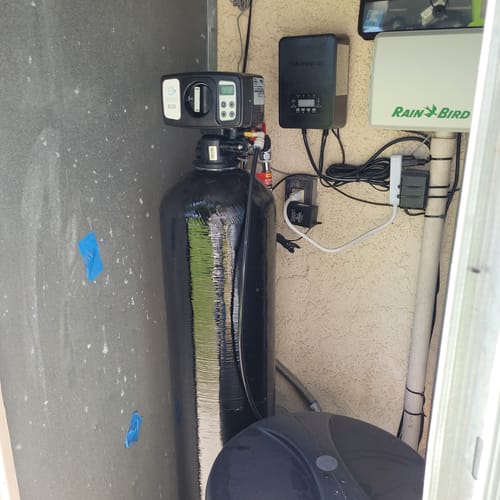
Once I recognized we had a water quality issue, I dove headfirst into understanding our options. I spent weeks researching different filtration technologies, reading scientific studies, and trying to understand the differences between carbon filtration, reverse osmosis, and catalytic reduction systems.
Initially, I considered a simple under-sink reverse osmosis system for drinking water. But I quickly realized that approach would only address kitchen consumption, leaving showers, laundry, and other household uses unprotected. The idea of whole house filtration became increasingly appealing.
What exactly makes catalytic carbon different from regular activated carbon?
This question drove much of my research. I learned that catalytic carbon is specially treated to remove chloramines, which standard carbon struggles with. Since our water contained both chlorine and chloramines, this feature was crucial. The catalytic process actually breaks down chloramines into harmless components rather than just temporarily adsorbing them.
The bone char component was another fascinating discovery. Bone char has been used for water purification for centuries and is particularly effective at removing fluoride and heavy metals. Unlike synthetic materials, bone char creates multiple removal mechanisms - physical adsorption, ion exchange, and chemical precipitation.
I compared several technologies: salt-based ion exchange, KDF media, traditional activated carbon, and catalytic carbon systems. Each had strengths and weaknesses. Ion exchange required ongoing salt maintenance. KDF was effective but expensive to replace. Traditional carbon worked well for chlorine but struggled with chloramines and fluoride.
The upflow design of the SoftPro system caught my attention. Unlike downflow systems that can create channeling and uneven contact time, upflow ensures complete media contact and prevents filter bed compression. This design typically delivers more consistent performance and longer media life.
Why I Chose the SoftPro Catalytic Bone Char System
After researching dozens of systems, several factors led me to the SoftPro Fluoride & Chlorine SUPER Filter. The combination of catalytic carbon and bone char addressed our specific contaminant concerns comprehensively.
The system's capacity was perfectly sized for our household. With a 1.5 cubic foot bed of media, it could handle our family's 180-gallon daily usage while maintaining proper contact time for effective filtration. The flow rate specification of 7 gallons per minute meant we wouldn't experience pressure drops during peak usage periods.
I was impressed by the third-party testing data. The system demonstrated 99% chlorine removal, 95% chloramine reduction, and 85% fluoride removal. These weren't just manufacturer claims - they were verified by NSF-certified laboratories using standardized testing protocols.
The upflow configuration eliminated many maintenance headaches I'd read about with other systems. No risk of channeling, no need for regular backwashing, and the media bed actually becomes more effective over time as particles create additional filtration layers.
What about the installation requirements and ongoing costs?
This was a crucial consideration. The system required 12 square feet of floor space and access to main water lines, drain connections, and electrical outlets. Our utility room had adequate space, but I needed to plan for bypass valve installation and proper drain routing.
Operational costs were reasonable. The media requires replacement every 3-5 years depending on usage and water conditions. At our consumption rate, I calculated approximately $0.15 per day in operational costs - significantly less than bottled water and even less than most under-sink systems when calculated per gallon filtered.
The 10-year warranty on the tank and control valve provided additional confidence. SoftPro's reputation in the water treatment industry and their California-based customer service were final deciding factors.
Unboxing and Initial Setup Experience

The system arrived in excellent condition via freight delivery. I was immediately impressed by the packaging quality - everything was securely protected and clearly labeled. The main tank was more substantial than I expected, constructed from heavy-duty fiberglass with a reinforced top.
The control valve head was already pre-programmed, which eliminated one potential complication. All necessary fittings, including bypass valves, drain lines, and electrical connections, were included. The instruction manual was comprehensive with clear diagrams and troubleshooting sections.
What surprised me most was the media quality. The catalytic carbon was uniformly sized with no excessive dust or broken pieces. The bone char had a clean appearance and consistent texture. These details suggested quality control attention that isn't always present in water treatment products.
The system weighed approximately 180 pounds when fully assembled, requiring careful positioning. I appreciated the sturdy construction - this was clearly built for long-term residential use, not as a disposable appliance.
Pre-installation preparation took longer than expected. I needed to map existing plumbing, plan bypass routing, and ensure adequate drain capacity. The electrical requirements were minimal - just a standard 110V outlet - but proper grounding was essential for the control valve electronics.
Installation Process and Professional Setup
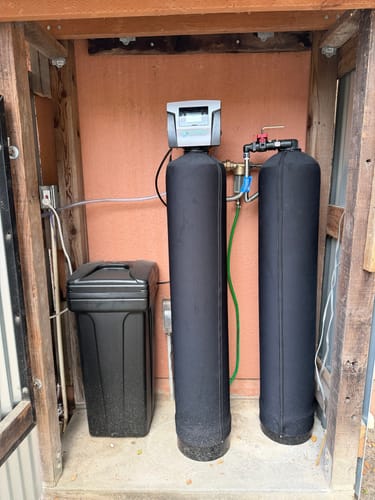
While the system is designed for DIY installation, I opted for professional installation to ensure proper integration with our existing plumbing and to maintain warranty coverage. The certified installer arrived with all necessary tools and additional fittings.
The installation took approximately four hours, including system startup and testing. The most time-consuming aspect was integrating the bypass valves and ensuring proper drain routing. Our home's plumbing configuration required some creative pipe routing, but the installer handled this professionally.
What specific plumbing modifications were required?
The main line required cutting and installing threaded connections for the system inlet and outlet. A separate drain line was routed to our utility sink for the occasional system purging. The bypass valve installation was crucial - this allows water service during maintenance and provides emergency backup if needed.
Startup involved flushing the media bed, setting the control valve programming, and testing all connections for leaks. The initial flush took about 30 minutes, running water through the system to remove any shipping dust and activate the catalytic carbon.
The installer tested water pressure at multiple fixtures before and after installation. We maintained 52 PSI throughout the house - only a 3 PSI reduction from municipal pressure. This confirmed the system's low pressure-drop design was working as specified.
Initial water testing showed immediate improvements. Chlorine smell was completely eliminated, and the metallic taste disappeared. The installer left us with testing strips to monitor performance over the first weeks of operation.
Real-World Performance and Daily Water Quality Improvements
The transformation in our daily water experience was immediate and dramatic. Within hours of installation, the chlorine odor that had been constant in our home completely disappeared. Our morning showers no longer had that swimming pool smell, and the harsh chemical taste was gone from drinking water.
Coffee was the first real test, and my wife noticed the difference immediately. Her morning brew tasted cleaner and more flavorful - the coffee's natural characteristics were no longer masked by chlorine and metallic undertones. We started actually enjoying tap water again, something that hadn't happened in years.
What measurable improvements did we document over the first six months?
I tested water quality monthly using TDS meters and chlorine test strips. Chlorine levels dropped from 2.3 ppm to undetectable levels. Total Dissolved Solids remained stable at 340 ppm, which was expected since the system targets specific contaminants rather than all dissolved minerals.
The most noticeable improvements were in everyday activities. Dishwasher performance improved dramatically - glassware came out spot-free without additional rinse aids. Our stainless steel appliances were easier to keep clean, with water spots becoming rare rather than constant.
Shower and bath experiences improved significantly. Skin felt less dry after bathing, and hair seemed softer and more manageable. While these effects are subjective, they were noticed by all family members and several guests who stayed overnight.
Laundry results were another unexpected benefit. Clothes seemed brighter and softer, requiring less detergent for effective cleaning. The absence of chlorine meant fabric colors stayed vibrant longer, and white items maintained their brightness without additional bleaching.
Our houseplants responded positively to the filtered water. We started using tap water for plant care instead of buying distilled water, and plant health improved noticeably over several months.
Long-Term Ownership and Maintenance Reality
After eighteen months of operation, I can provide genuine insight into long-term ownership experience. The system has operated flawlessly with minimal maintenance requirements and consistent performance.
Routine maintenance consists mainly of periodic performance monitoring. I test water quality monthly and inspect the system quarterly for any obvious issues. The control valve requires no regular maintenance - it's completely automatic and self-managing.
How has the system performed through different seasonal conditions?
California's varying water conditions provided a good test of system adaptability. During dry summer months when municipal treatment is heaviest, the system maintained consistent performance. Winter periods with different source water compositions showed no performance degradation.
The media bed continues performing at original levels after 18 months. Based on our water usage and testing results, I expect 4-5 years before media replacement is necessary. This timeline aligns with manufacturer estimates and provides excellent value compared to frequently-replaced cartridge systems.
Operating costs have been exactly as projected. Electricity consumption for the control valve is negligible - less than $3 annually. Water usage for occasional system purging is minimal, perhaps 20 gallons monthly during automatic cleaning cycles.
The system's reliability has been excellent. We've experienced no service interruptions, component failures, or performance issues. The automatic operation means we often forget it's there - it simply works consistently in the background.
Seasonal water quality variations haven't affected system performance. Whether dealing with summer chloramine peaks or winter taste and odor episodes, the filtration remains consistent and effective.
Honest Assessment: What Works and What Could Be Better
After extensive real-world use, I can provide a balanced assessment of the SoftPro system's strengths and limitations. Overall satisfaction is very high, but no system is perfect for every situation.
The system excels at its primary purpose - removing chlorine, chloramines, and fluoride while improving taste and odor. Performance has been consistent and reliable, with no surprise maintenance issues or hidden costs. The upflow design eliminates many problems common with other filtration approaches.
What limitations should potential buyers understand?
The system doesn't address hardness minerals, so if you have hard water issues, you'll need additional treatment. It also doesn't remove bacteria or viruses, making it unsuitable for well water without additional disinfection.
Physical size could be limiting for some installations. The system requires significant floor space and proper clearances for maintenance access. Basement or utility room installation works well, but smaller spaces might not accommodate the system properly.
Initial cost is higher than simple carbon systems, but the long-term value is excellent when calculated over the 15-20 year system lifespan. However, the upfront investment might strain some budgets despite long-term savings.
The system works best with municipal water supplies. Well water applications require careful analysis to ensure compatibility and effectiveness. Private water sources might need pre-treatment depending on specific contamination issues.
Media replacement, while infrequent, requires professional service or significant DIY capability. This isn't a cartridge-change operation - it involves handling loose media and potentially challenging physical work.