
Hi, I'm Glen M.. I live in Nevada.
Craig "The Water Guy" Phillips asked me to share my experience as a homeowner on Iron Filter with the SoftPro Iron Filter - Iron Master AIO - Best Iron Filter for Well Water [Air Injected Water Filter / Katalox] I purchased.
This is how my adventures played out. I hope this helps you in your decision.
Did you know that over 25% of American households rely on well water, and nearly 40% of those deal with iron contamination issues? I certainly didn't realize how common my problem was until I started researching solutions last year.
Living in Nevada with well water, I thought the occasional rusty streaks in my toilets and the metallic taste in my morning coffee were just part of rural life. Boy, was I wrong. After eight months with the SoftPro Iron Master, I can honestly say my water quality journey has been a complete transformation – though it wasn't without its learning curves.
The setup was definitely time-consuming, and I'll be upfront about that from the start. But the results? I'm fully satisfied with what this system has delivered for my household. Let me walk you through exactly what I experienced, the good and the challenging, so you can make an informed decision for your own situation.
The Iron Problem That Started My Search
My iron issues weren't subtle. Every morning, I'd wake up to orange stains creeping down the sides of our white porcelain toilets. The shower doors had this persistent film that no amount of scrubbing with regular cleaners could touch. But what really got my attention was when my wife started complaining about her blonde highlights turning brassy after just a few washes.
I had our well water tested through our local extension office, and the results showed 4.2 parts per million (PPM) of iron. For context, anything above 0.3 PPM starts causing noticeable staining and taste issues. At 4.2 PPM, we were dealing with what the technician called "moderate to heavy" iron contamination.
The iron in our water was primarily ferrous iron – the dissolved, clear form that turns rusty when it hits oxygen. This explained why our water looked clear coming out of the tap but left orange stains everywhere it sat. The well is about 180 feet deep, drilled into a sandstone formation that's apparently rich in iron deposits.
Before finding the Iron Master, I tried a basic carbon filter from the hardware store. Waste of $200. The iron just sailed right through it like it wasn't even there. I also experimented with adding a water softener, thinking it might help, but learned that standard water softeners can actually make iron problems worse by converting ferric iron back to the dissolved ferrous form.
The real wake-up call came when our water heater started making strange rumbling sounds. When the plumber came out, he showed me the sediment that had built up – thick, rusty sludge that was reducing our tank's efficiency and would eventually damage the heating elements. That's when I realized this wasn't just a cosmetic problem; it was costing me money in appliance damage and energy costs.
Research Phase: Understanding Iron Filter Technologies
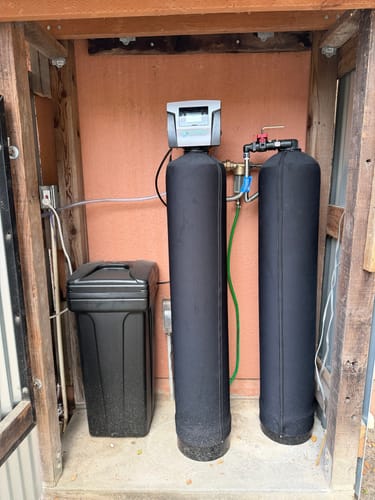
Once I committed to solving this properly, I dove deep into understanding how iron filtration actually works. The key insight I discovered is that most effective iron removal systems use oxidation – they convert dissolved ferrous iron into ferric iron particles that can then be filtered out.
I learned about three main approaches: chemical oxidation (using chlorine or potassium permanganate), air injection oxidation, and catalytic media filtration. Each has its trade-offs in terms of maintenance, operating costs, and effectiveness for different iron levels.
The SoftPro Iron Master uses air injection oxidation combined with Katalox Light catalytic media. Here's how I understood it to work: the system injects air into the water stream, which oxidizes the dissolved iron. The Katalox Light media then acts as both a catalyst to speed up the oxidation process and a filter to capture the oxidized iron particles.
What attracted me to this approach was the lack of ongoing chemical additions. Some iron filters require you to periodically add chlorine or potassium permanganate solutions. With two young kids in the house, I preferred a chemical-free approach.
The system is rated to handle up to 10 PPM of iron, which gave me comfortable headroom above my 4.2 PPM level. It's also designed to handle hydrogen sulfide (that rotten egg smell) up to 5 PPM, though I didn't have sulfur issues to test that capability.
Capacity-wise, the Iron Master comes in several sizes. For my household of four with typical usage patterns, I chose the 1.5 cubic foot model, which is rated for 8-12 GPM flow rate and can handle our peak demand during morning showers and evening dishwashing.
The certification aspect was important to me. The system carries NSF/ANSI Standard 61 certification for materials safety, meaning all components that contact drinking water meet strict health standards. It's also built to NSF/ANSI Standard 372 for lead-free compliance.
Unboxing and Initial Impressions
The Iron Master arrived on a pallet via freight delivery, which should give you an idea of the size and weight we're talking about. The main tank stands about 54 inches tall and weighs close to 200 pounds when loaded with media.
First impression: this is clearly commercial-grade equipment. The fiberglass tank has a thick, durable feel, and the control valve is substantially built with a digital display and clearly labeled ports. Everything felt solid and well-engineered, not like the lightweight residential filters I'd seen at home improvement stores.
The packaging was professional – each component individually wrapped and cushioned. Along with the main tank, the shipment included the air injection venturi, pressure tank, check valve, various fittings, and a comprehensive installation manual with actual photographs (not just line drawings).
I was pleasantly surprised by the quality of the documentation. The manual was clearly written for both professional installers and capable DIYers, with separate sections for different skill levels. They included a troubleshooting section and maintenance schedule right up front.
One minor disappointment: the bypass valve wasn't included and had to be purchased separately. For a system at this price point, I expected that to be included. However, they did provide clear specifications for what type of bypass valve to use.
Installation Experience: Time-Consuming But Manageable

Let me be upfront – the installation was definitely time-consuming, as my original review mentioned. What the manual estimated as a "4-6 hour installation" turned into a full weekend project for me.
The main challenge was integrating the system into my existing plumbing setup. My water line from the well comes into the house through the basement, where I also have my pressure tank and water softener. Finding space for the Iron Master tank while maintaining proper clearances for service access required some creative rearranging.
The air injection component adds complexity compared to simpler filter systems. You need to install an air injection venturi in the line before the main tank, along with a separate small pressure tank to store the injected air. Getting all the connections tight and leak-free took patience and multiple test runs.
I ended up calling a local plumber for consultation on the electrical connections. The control valve requires 115V power and draws about 3 amps during regeneration cycles. Since I didn't have an outlet near the installation location, running a dedicated circuit added time and cost I hadn't fully anticipated.
The most tedious part was the initial setup and programming of the control valve. You have to configure settings for water hardness, iron levels, household size, and regeneration frequency. The manual provides lookup tables, but it took several adjustments over the first few weeks to optimize the settings for our specific conditions.
One helpful tip I learned: run the system through several complete regeneration cycles before putting it into service. This helps settle the media and ensures all air pockets are purged from the system. I was eager to start using it immediately, but taking the time for proper startup prevented issues later.
Performance Testing and Real-World Results
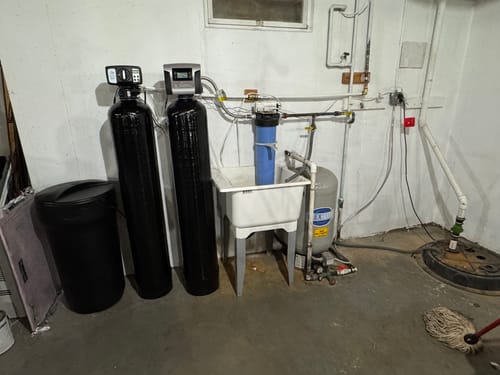
After the initial setup and commissioning, I tested the Iron Master's performance using both home test kits and professional lab analysis. The results were impressive and consistent.
Using a digital TDS meter and iron test strips, I measured pre-treatment iron levels at 4.1-4.3 PPM (consistent with my original lab test). Post-treatment levels consistently showed less than 0.1 PPM – well below the 0.3 PPM threshold where taste and staining issues begin.
The visual improvements were immediate and dramatic. Within 24 hours of starting the system, new water stains stopped appearing. The orange residue that used to accumulate in toilet bowls was gone. My white bathroom fixtures stayed white.
But the real test was time. After three months of operation, I had our water professionally retested. Iron levels measured at 0.05 PPM, confirming the home test results. More importantly, the system was maintaining this performance consistently without any decline in effectiveness.
Flow rate performance exceeded my expectations. During peak usage – morning showers running simultaneously with the dishwasher starting up – I measured water pressure at our fixtures. The pressure drop across the Iron Master Well water iron system by SoftPro was minimal, about 2-3 PSI under peak flow conditions.
The air injection system operates automatically, but you can hear it working. There's a subtle "whooshing" sound when the venturi draws air into the water line. It's not loud or annoying, but it's noticeable in a quiet basement. The sound actually became reassuring over time – I knew the system was actively working.
Regeneration cycles occur automatically based on water usage and time settings. In our household, the system typically regenerates every 4-5 days, using approximately 150 gallons of water per cycle. The entire process takes about 90 minutes, during which water is still available but bypasses the treatment system.
Daily Living Impact and Household Benefits
The transformation in our daily water experience has been remarkable. My wife immediately noticed the difference in her hair – no more brassy discoloration, and her shampoo seems to work better without competing against iron deposits.
Our coffee tastes significantly better. I didn't realize how much the metallic taste was affecting our morning routine until it was gone. We've actually started making coffee at home more often instead of stopping at the coffee shop.
Cleaning became noticeably easier. The bathroom fixtures that used to require weekly scrubbing with CLR or other heavy-duty cleaners now stay clean with regular bathroom cleaner. I estimate I'm saving 2-3 hours per month on cleaning tasks related to iron staining.
Our appliances are performing better too. The dishwasher used to leave spots on glassware no matter what detergent or rinse aid I used. Now glasses come out sparkling clear. The washing machine produces whiter whites and brighter colors without the iron discoloration that was gradually dulling our clothes.
An unexpected benefit was discovered when our HVAC technician came for annual maintenance. He commented that our humidifier wasn't showing the typical mineral buildup he usually sees in well water homes. The iron removal apparently reduces overall mineral load on all our water-using systems.
Visitors have actually commented on the water quality. My mother-in-law, who's quite particular about water taste, mentioned that our water "tastes like city water" now – which she meant as a compliment compared to the metallic taste she remembered from previous visits.
Operating Costs and Long-Term Ownership
Understanding the total cost of ownership was crucial in my decision-making process, and eight months of operation has given me solid data on ongoing expenses.
The Katalox Light media is designed to last 5-7 years under normal operating conditions. At current replacement costs, that works out to about $60-80 per year in media replacement expenses. However, the media can often be rejuvenated through proper backwashing, potentially extending its life.
Electricity consumption is minimal. The control valve draws power only during regeneration cycles and for the digital display. I estimate about $3-5 per month in additional electrical costs based on our local utility rates.
Water usage for regeneration is the most significant ongoing cost. Each cycle uses approximately 150 gallons, and we average 6-7 cycles per month. At our well water costs (primarily electricity for the well pump), this adds roughly $15-20 monthly to our utility bills.
But these costs need context. Before the Iron Master, I was spending about $40 monthly on specialty cleaning products, bottled water for coffee making, and frequent replacement of stained items. The iron damage to our water heater would have required early replacement, saving us an estimated $1,200-1,500 over the system's expected lifespan.
When I factor in the appliance protection, reduced cleaning time, and improved quality of life, the Iron Master easily pays for itself within 18-24 months of operation. After that, the ongoing costs are minimal compared to the benefits provided.
Maintenance requirements have been straightforward. Monthly tasks include checking the air pressure tank and verifying the regeneration schedule is appropriate for current usage. Every three months, I test the treated water to confirm performance remains optimal.
Honest Assessment: What Could Be Better
While I'm fully satisfied overall, the Iron Master isn't perfect. Here are the limitations and drawbacks I've encountered during my ownership experience.
The installation complexity is genuinely challenging for average DIYers. If you're not comfortable with plumbing, electrical work, and following detailed technical procedures, professional installation is necessary. This adds $500-800 to the total project cost in my area.
Space requirements are significant. The main tank, air injection equipment, and required clearances consume considerable basement real estate. In smaller homes or tight utility spaces, fitting everything properly could be problematic.
The regeneration noise is noticeable. While not excessive, the system makes audible sounds during backwash and regeneration cycles. If your utility area is near living spaces, this could be mildly disruptive during evening or early morning regenerations.
Programming the control valve requires patience and understanding. The manual is comprehensive, but optimizing settings for your specific water conditions and usage patterns takes time and experimentation. I made several adjustments over the first month.
Water waste during regeneration bothers environmentally conscious users. Using 150 gallons every few days for system cleaning feels wasteful, even though it's necessary for proper operation. There's no way around this with current technology.
The bypass valve situation remains annoying. For a premium system, having to source this critical component separately adds unnecessary complexity and cost to the installation process.
Finally, the system requires consistent electrical power. During power outages, the Iron Master doesn't operate, and we revert to untreated well water until power restoration. A battery backup system could address this but adds cost and complexity.