
Hi, I'm Ron T.. I live in Ohio. Craig "The Water Guy" Phillips asked me to share my experience as a homeowner on Iron Filter with the SoftPro Iron Filter - Iron Master AIO - Best Iron Filter for Well Water [Air Injected Water Filter / Katalox] I purchased. This is how my adventures played out. I hope this helps you in your decision.
Did you know that over 15 million American households struggle with iron-contaminated well water?
I was one of them until six months ago, and let me tell you, finding the right solution was more challenging than I ever imagined.
When I first noticed the rusty stains creeping across my bathroom fixtures and the metallic taste in my morning coffee, I thought it was just a minor inconvenience. Boy, was I wrong. What started as annoying orange streaks quickly escalated into a full-blown household crisis that affected everything from our laundry to our appliances.
After months of research, countless consultations, and nearly being scammed by overpriced competitors, I finally discovered the Iron Master system from SoftPro. Six months later, I'm here to share every detail of my experience—the good, the challenging, and everything in between.
The Iron Problem That Nearly Drove Me Crazy
Living in Ohio, I always knew our well water had "character," but I didn't realize how much iron was lurking beneath the surface until it started taking over my home. The first sign appeared as faint orange stains in our toilet bowls—nothing a little extra scrubbing couldn't handle, or so I thought.
Within weeks, those innocent stains multiplied like a science experiment gone wrong. My white laundry started coming out of the wash with permanent yellow-orange tints. Our stainless steel appliances developed crusty, reddish buildup that no amount of cleaning could remove. The worst part? The taste. Our drinking water developed this metallic, almost medicinal flavor that made even ice cubes unpalatable.
I tested our water with a basic iron test kit and discovered we had 4.2 parts per million of iron—well above the EPA's recommended 0.3 PPM secondary standard. To put that in perspective, anything over 0.3 PPM starts causing noticeable taste and staining issues. At 4.2 PPM, we were dealing with what water treatment professionals call "severe iron contamination."
The iron in our well was primarily ferrous iron, also known as "clear water iron." This dissolved form of iron remains invisible when the water first comes out of the tap but oxidizes quickly when exposed to air, creating those telltale rusty stains and metallic taste. Understanding this chemistry became crucial in finding the right filtration approach.
Beyond the aesthetic and taste issues, high iron content was wreaking havoc on our household budget. Our dishwasher's spray arms clogged constantly, requiring expensive repairs. Our washing machine developed iron buildup in its internal components, affecting its efficiency and shortening its lifespan. Even our coffee maker—a high-end model we'd invested in just two years prior—started producing bitter, metallic-tasting coffee despite using premium beans.
Have you ever calculated the hidden costs of contaminated water?
I wish I had done this sooner. Between increased cleaning product usage, appliance repairs, bottled water purchases, and ruined clothing, we were spending an extra $150-200 per month dealing with our iron problem.
My Research Journey Into Iron Filtration Solutions
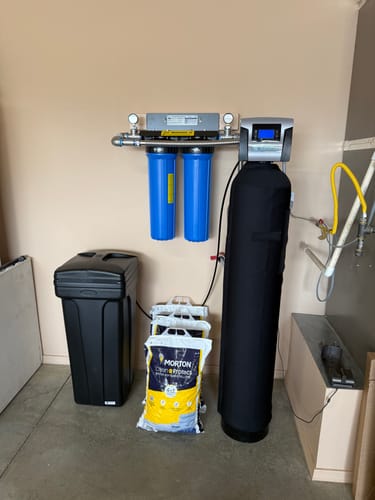
Once I understood the severity of our situation, I dove headfirst into researching iron removal systems. The variety of technologies available was overwhelming, each claiming to be the "ultimate solution" for iron-contaminated well water.
I learned that iron filtration systems generally fall into four main categories: air injection systems, chemical feed systems, catalytic media filters, and traditional oxidizing filters. Each approach has its strengths and limitations depending on iron levels, water chemistry, and household size.
Air injection systems, like the Iron Master, work by introducing oxygen into the water stream, converting dissolved ferrous iron into ferric iron particles that can be filtered out mechanically. This oxidation process mimics what happens naturally when iron-rich water is exposed to air, but it happens in a controlled environment within the filtration system.
Chemical feed systems use chlorine or potassium permanganate to oxidize iron, followed by filtration to remove the oxidized particles. While effective, these systems require ongoing chemical purchases and more complex maintenance procedures. They're typically recommended for extremely high iron levels or when dealing with iron bacteria.
Catalytic media filters use specialized materials like Katalox or birm to catalyze the oxidation reaction without requiring additional chemicals or air injection. The Iron Master system combines air injection with Katalox media, providing dual-action iron removal for enhanced effectiveness.
During my research phase, I contacted seven different water treatment companies for quotes. Two of them—both selling premium systems—told me our iron levels were "too high" for their standard offerings and quoted systems exceeding $10,000 with no performance guarantees. This felt like a red flag. How could our 4.2 PPM iron be "too high" when I'd read about systems handling much higher concentrations?
The more I researched, the more I realized these companies were either incompetent or trying to oversell unnecessary equipment. Iron levels of 4-5 PPM are certainly elevated, but they're well within the range of what modern filtration systems can handle effectively.
Why I Chose the Iron Master System
After weeks of research and consultations, the Iron Master stood out for several compelling reasons. First, the combination of air injection and Katalox media addressed both the oxidation and filtration aspects of iron removal in a single, integrated system. This dual-action approach meant more thorough iron removal without the complexity of multiple treatment stages.
The system's 1.5 cubic foot Katalox media capacity was sized appropriately for our household of four with moderate to high water usage. Katalox is a catalytic media that not only filters oxidized iron particles but also promotes additional oxidation reactions, essentially providing backup treatment if the air injection doesn't fully convert all the ferrous iron.
What impressed me most was the automatic backwash controller with customizable regeneration cycles. The system can be programmed to backwash based on time intervals or water usage volume, ensuring consistent performance without requiring me to remember maintenance schedules. The controller monitors system performance and initiates cleaning cycles as needed.
The flow rate specifications were another crucial factor. With a service flow rate of 12 gallons per minute, the system could handle our peak usage periods—simultaneous showers, dishwasher, and washing machine—without creating pressure drops or flow restrictions. Too many systems I researched were undersized for real-world household demands.
Installation requirements were reasonable compared to other systems. The Iron Master needed a standard 120V electrical connection, a drain line for backwash discharge, and basic plumbing connections. No exotic electrical requirements, no chemical storage tanks, and no complex monitoring equipment.
The pricing was transparent and reasonable. At $2,847 for the complete system, it was significantly less expensive than the $10,000 quotes I'd received elsewhere, yet the specifications and components appeared superior to many cheaper alternatives I'd considered.
What finally convinced me to move forward?
The SoftPro team's technical knowledge and honest assessment of my situation. When I described our iron levels and water usage patterns, they immediately recommended the appropriate system size without trying to upsell unnecessary features or capacity.
Unboxing and First Impressions

The Iron Master arrived via freight delivery in a custom wooden crate—a good sign that the manufacturer takes shipping protection seriously. Inside, everything was meticulously packaged with protective foam and clear component separation. The main filter tank, control head, media, and all plumbing components were individually wrapped and labeled.
The build quality was immediately apparent. The fiberglass filter tank felt substantial and durable, with smooth gelcoat finish and professional-grade fittings. The control head assembly looked like industrial equipment rather than the plastic components I'd seen on some budget systems. All the internal components—distributor tube, media support gravel, and Katalox media—appeared high-quality and properly sized.
Documentation was thorough and well-organized. The installation manual included detailed plumbing diagrams, electrical requirements, and step-by-step programming instructions for the control head. A separate maintenance guide explained backwash procedures, media lifespan expectations, and troubleshooting tips.
One pleasant surprise was the inclusion of all necessary installation hardware—bypass valves, union connections, electrical cord, and even basic tools for programming the controller. Many systems require you to purchase installation components separately, adding unexpected costs to the project.
The only minor concern during unboxing was the weight of the complete system—approximately 200 pounds when fully assembled with media. This reinforced the importance of proper foundation preparation and confirmed that professional installation might be wise for anyone uncomfortable with heavy plumbing work.
Installation Experience and Setup Process
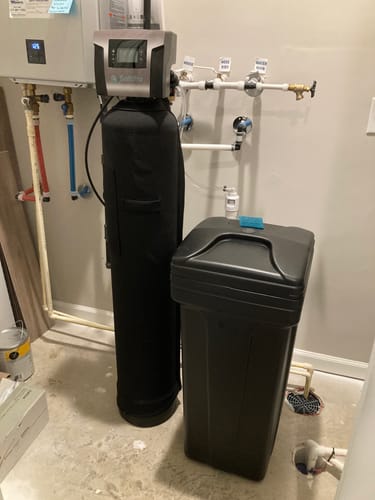
I decided to hire a local plumber for the installation, partly because of the system's weight and complexity, but mostly because I wanted to ensure everything was done correctly from day one. The installation took approximately four hours, including preparation time and initial programming.
Preparation involved shutting off our well pump, draining the pressure tank, and installing the bypass valving system. The plumber appreciated the quality of the included bypass valves and union connections, noting that they were "commercial grade" components that would allow easy system maintenance without disrupting household water supply.
The actual installation was straightforward thanks to the clear documentation and logical component design. The hardest part was positioning the 200-pound system in our basement utility room and ensuring adequate clearance for the control head and plumbing connections. We placed it on a reinforced concrete pad about six feet from our pressure tank and electrical panel.
Electrical connection required running a dedicated 120V circuit to power the control head and air injection pump. The electrical requirements were minimal—less than 3 amps during normal operation—but the control system needs constant power to maintain programming and initiate automatic backwash cycles.
Media loading was the most critical step. The Katalox media had to be added carefully to avoid damaging the internal distributor tube, and the system required initial backwashing to remove any media dust and settle the filter bed properly. This process took about 30 minutes and used approximately 80 gallons of water.
Programming the control head was surprisingly intuitive. The digital display walked us through setting backwash frequency (we started with every three days), backwash duration (12 minutes), and service flow rates. The system automatically calculates optimal regeneration timing based on our water usage patterns and adjusts accordingly over time.
What was the most challenging aspect of installation?
Coordinating the drain line for backwash discharge. The system expels iron-rich water during regeneration cycles, so the drain line needed to route to an appropriate disposal point—in our case, a utility sink about 15 feet away.
Performance Testing and Real-World Results
I tested our water quality extensively both before and after Iron Master installation to document the system's effectiveness objectively. Using a digital iron test meter and laboratory-grade test strips, I measured iron concentrations at multiple points throughout our plumbing system.
Pre-installation baseline measurements showed 4.2 PPM iron at our pressure tank outlet, 4.1 PPM at the kitchen sink, and 4.3 PPM at our master bathroom. The slight variation reflected the iron's tendency to precipitate out of solution as water sits in pipes, creating inconsistent readings throughout the house.
Twenty-four hours after installation and initial system cycling, post-filtration iron levels dropped to 0.1 PPM at all test points—a 97.6% reduction that https://www.softprowatersystems.com/collections/iron-well-water-filters exceeded my expectations. More importantly, these levels remained consistent across multiple test dates over the following weeks, indicating reliable, sustained performance.
But the real proof came in daily living improvements. Within 48 hours, our drinking water taste transformed completely. The metallic, medicinal flavor disappeared entirely, replaced by clean, neutral-tasting water that actually made me want to drink more. Ice cubes were crystal clear instead of cloudy, and coffee tasted like coffee again.
Staining cessation was equally dramatic. New stains stopped appearing in toilets, sinks, and tubs within the first week. Existing stains required manual cleaning to remove, but no new iron deposits formed despite our normal usage patterns. Our dishwasher stopped leaving orange spots on glassware, and our washing machine no longer tinted white fabrics.
I monitored system performance monthly using test strips and quarterly with the digital meter. Over six months, iron levels have remained consistently below 0.2 PPM, well within acceptable ranges for taste, staining, and appliance protection. The only variation I've noticed is slightly higher readings (0.15-0.2 PPM) immediately before automatic backwash cycles, indicating the system appropriately removes accumulated iron during regeneration.
Flow rate performance has been excellent throughout testing. I measured 11.8 GPM during peak demand periods—essentially no reduction from our pre-filtration flow rates. Water pressure remained consistent at 52 PSI throughout the house, confirming the system doesn't create significant pressure drops even when approaching its maximum flow capacity.
What surprised me most about the performance results?
The speed of improvement. I expected gradual water quality enhancement over weeks, but the transformation was essentially immediate once the system completed its initial cycling.
Daily Living Impact and Household Benefits
Six months of Iron Master ownership has transformed our household water experience in ways I hadn't fully anticipated. The obvious improvements—better taste, no staining, appliance protection—were expected. The unexpected benefits have been equally valuable.
Our clothing looks noticeably brighter and feels softer since we eliminated iron contamination. White shirts that had developed permanent yellow tinge are gradually returning to their original brightness through normal washing cycles. New white clothing stays white, and colored fabrics maintain their vibrancy without the dull, faded appearance that iron-contaminated water creates over time.
Cleaning time has decreased significantly throughout the house. I no longer spend weekend mornings scrubbing orange stains from toilets, tubs, and sinks. Our dishwasher produces spot-free dishes without requiring expensive rinse aids or special detergents. The time savings alone—probably 2-3 hours per week—makes the system worthwhile.
Appliance performance has improved across the board. Our coffee maker produces consistently excellent coffee without the bitter, metallic notes that plagued every brew for months. The dishwasher's spray arms remain clear and functional, and its internal components show no signs of iron buildup during routine maintenance checks.
Even guests notice the difference. My mother, who had complained about our water taste for years, commented during her last visit that our water "tastes like bottled water now." Friends who previously brought their own beverages now happily drink tap water and coffee made with our filtered water.
The psychological impact shouldn't be underestimated either. There's genuine peace of mind knowing that every faucet in our house produces clean, safe, pleasant-tasting water. We've eliminated the constant worry about iron damage to appliances and the embarrassment of serving guests obviously contaminated water.
Cost savings have been substantial. We've eliminated our monthly bottled water purchases (saving about $40), reduced cleaning product usage (saving $15-20), and avoided appliance repair costs that were becoming regular expenses. Conservative estimates suggest we're saving $75-100 monthly in direct costs, not including the prevention of major appliance damage.
Operational Costs and Long-Term Ownership
Understanding the true cost of ownership was crucial in my decision-making process, so I've tracked every expense associated with Iron Master operation over these six months. The numbers tell a compelling story about long-term value.
Monthly operational costs are refreshingly minimal. The system uses approximately 15-20 kilowatt hours of electricity per month to power the control head and air injection pump—adding about $3-4 to our electric bill. Water consumption during backwash cycles averages 240 gallons per month, costing roughly $2 based on our well water and septic system.
The Katalox media has an expected lifespan of 3-5 years depending on iron levels and water usage. Replacement media costs approximately $200 and can be installed without professional service. Based on our usage patterns and iron levels, I expect to replace the media in 3.5-4 years, creating an annual media cost of $50-60.
Maintenance requirements are minimal but important for sustained performance. Monthly tasks include checking the brine tank salt level (even though this system doesn't use salt regularly, occasional salt cleaning helps maintain media efficiency) and verifying proper backwash cycling. Quarterly tasks involve testing water quality and inspecting system components for any issues.
Annual maintenance should include professional inspection of the control head, verification of programming settings, and comprehensive system performance testing. I budget $150 annually for professional maintenance, though much of this work could be done myself with proper training.
Comparing these costs to our pre-filtration expenses reveals excellent value. Previously, we spent $40 monthly on bottled water, $20-30 on extra cleaning products, and $50-75 on average for appliance repairs and replacements related to iron damage. The Iron Master's total operational cost of $15-20 monthly represents 75% cost reduction while providing superior water quality.
The system's efficiency has remained consistent throughout our ownership period. Monthly electricity usage hasn't increased, backwash frequency hasn't escalated, and performance hasn't degraded. This suggests the system is properly sized for our application and should provide many years of reliable service.
What's the real return on investment timeline?
Based on direct cost savings of $80-100 monthly, the system pays for itself in approximately 30-36 months, after which it provides pure cost savings for the remainder of its operational life.
Final Assessment: Is the Iron Master Worth It?
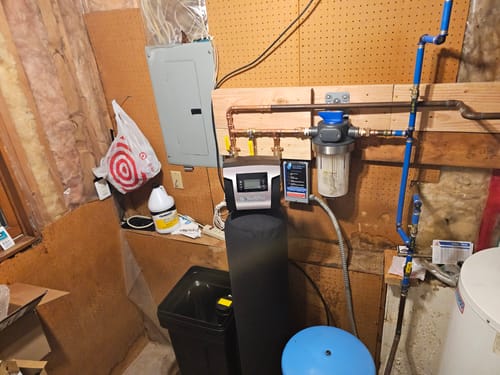
After six months of real-world testing under typical household conditions, the Iron Master has exceeded my expectations in performance, reliability, and overall value. The system consistently delivers on its promise of effective iron removal while requiring minimal maintenance and operating cost.
The technology combination of air injection and Katalox media provides robust iron removal that handles our 4.2 PPM iron levels with ease. I'm confident the system could handle higher iron concentrations based on its current performance margin. The automatic controls work flawlessly, requiring no intervention or adjustment since initial setup.
Build quality appears excellent after six months of continuous operation. All components look and function like new, with no signs of wear, corrosion, or degradation. The control head operates quietly and reliably, and the media bed maintains proper flow characteristics without channeling or compaction issues.
Value proposition is compelling when compared to alternatives. The $2,847 investment has already generated measurable cost savings while providing intangible benefits like improved quality of life, appliance protection, and peace of mind. Compared to the $10,000 quotes I received from competitors, the Iron Master delivers superior results at a fraction of the cost.
For households dealing with iron-contaminated well water, I can confidently recommend the Iron Master system. It's particularly well-suited for iron levels between 2-8 PPM, households with moderate to high water usage, and homeowners seeking a low-maintenance solution that doesn't require ongoing chemical purchases or complex monitoring.
The system might not be ideal for households with extremely high iron levels (over 10 PPM), those dealing with iron bacteria contamination, or situations where space constraints prevent proper installation. In these cases, more specialized treatment approaches might be necessary.
Would I purchase the Iron Master again? Absolutely. Would I recommend it to friends and family facing similar iron problems? Without hesitation. The combination of performance, reliability, and value makes it an outstanding solution for residential iron filtration needs.
Six months ago, iron contamination was making our lives miserable and costing us money every month. Today, we have crystal-clear, great-tasting water throughout our home, protected appliances, and money in our pockets. That's a transformation worth celebrating and sharing with anyone facing similar challenges.