
Hi, I'm Kenn A.. I live in Tennessee. Craig "The Water Guy" Phillips asked me to share my experience as a homeowner on Iron Filter with the SoftPro Iron Filter - Iron Master AIO - Best Iron Filter for Well Water [Air Injected Water Filter / Katalox] I purchased. This is how my adventures played out. I hope this helps you in your decision.
The Rust Problem That Finally Pushed Me Over the Edge
Did you know that iron contamination affects over 25% of American well water systems, turning once-clear water into a rusty, metallic nightmare that stains everything it touches?
That's exactly what I was dealing with in my Tennessee home.
For months, I watched helplessly as orange stains crept across my bathroom fixtures like some kind of slow-motion disaster. My white porcelain toilet had developed these stubborn rust rings that no amount of scrubbing could remove. The shower walls looked like abstract art painted in shades of orange and brown.
But the breaking point came when my wife opened the dishwasher after what should have been a normal cleaning cycle.
Our "clean" dishes were covered in orange spots and had this metallic taste that made drinking water from our own glasses absolutely unbearable. I measured the iron content using a simple test kit and discovered we had 4.2 parts per million of iron in our well water - nearly three times the EPA's recommended maximum of 0.3 ppm.
The iron wasn't just an aesthetic problem.
It was costing us money in ruined clothes, constant cleaning supplies, and the growing realization that our water heater and appliances were probably getting damaged from the inside out. I calculated that we were spending an extra $200 per month on bottled water, stain removers, and replacing items that couldn't be salvaged.
Something had to change, and it had to change fast.
My Research Journey Into Iron Filtration Technologies
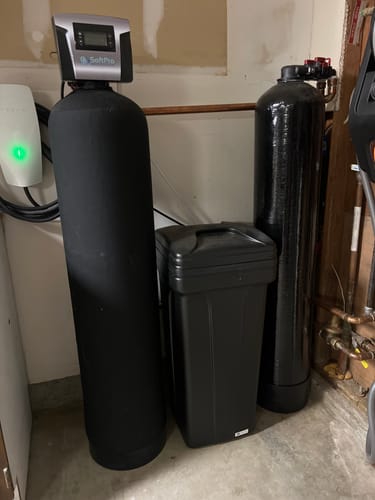
I'll be honest - before this iron problem forced my hand, I knew almost nothing about water treatment systems.
My crash course education started with understanding why our well water had such high iron levels in the first place. Tennessee's geology, particularly in our region, contains iron-rich soil deposits that naturally leach into groundwater systems. When water sits in contact with iron-bearing rock formations, it dissolves ferrous iron, creating the clear but problematic water that comes out of our well.
The tricky part is that ferrous iron is invisible when it first comes out of the tap.
It only becomes the visible, staining ferric iron after exposure to oxygen. This oxidation process is what creates those telltale orange stains and that metallic taste we'd been battling.
Through my research, I discovered several different approaches to iron removal:
Water softeners can handle small amounts of iron (typically under 3 ppm), but our 4.2 ppm level would quickly overwhelm the resin and reduce the system's effectiveness for its primary job of removing hardness minerals.
Sediment filters might catch some oxidized iron particles, but they don't address the root cause and would need constant replacement with our iron levels.
Greensand filters use manganese-treated sand to catalyze iron oxidation, but they require potassium permanganate regeneration - a chemical I wasn't comfortable handling regularly.
Air injection systems force oxygen into the water to convert ferrous iron to ferric iron, then filter out the oxidized particles. This approach made sense because it works with natural oxidation rather than relying on chemicals.
After comparing flow rates, maintenance requirements, operating costs, and effectiveness levels, I narrowed my focus to air injection systems that could handle our specific iron concentration while maintaining adequate water pressure for our household of four.
Why the Iron Master Caught My Attention
Several factors made the SoftPro Iron Master stand out during my decision-making process.
First, the system's capacity specifications aligned perfectly with our needs. With a service flow rate of 7 gallons per minute and the ability to handle iron concentrations up to 15 ppm, it had more than enough capacity to address our 4.2 ppm iron level while maintaining proper water pressure during peak usage periods.
The Katalox media was a major selling point.
Unlike traditional greensand, Katalox is a naturally occurring mineral that doesn't require chemical regeneration. Instead, it uses a simple backwash cycle with our existing well water. This meant lower ongoing costs and eliminated my concerns about storing and handling potassium permanganate.
The air injection system design impressed me with its simplicity.
The SoftPro Valve automatically draws air into a chamber at the top of the tank during the service cycle. This air mixes with incoming water, oxidizing the ferrous iron into ferric iron particles that the Katalox media can trap and filter out.
I also appreciated the system's NSF certification for iron reduction, which provided third-party verification of its performance claims.
The warranty coverage - 10 years on the tank and 5 years on the SoftPro Valve - suggested a manufacturer confident in their product's durability.
Most importantly, the system was designed for DIY installation.
With clear instructions and standard plumbing connections, I could avoid the $800-1,200 installation fees that local water treatment companies were quoting.
Unboxing and First Impressions

The Iron Master arrived in two separate shipments due to the weight and size of the components.
The main tank came first - a substantial fiberglass vessel that immediately felt more robust than I expected. At 54 inches tall and 13 inches in diameter, it required some planning to maneuver into our utility room. The tank's finish was smooth and professional-looking, without any visible defects or rough edges.
The second shipment contained the SoftPro Valve head, plumbing connections, and installation hardware.
Everything was well-packaged with protective foam, and I was pleased to find that all the fittings were high-quality brass rather than plastic. The SoftPro Valve felt substantial in my hands, with clear LED indicators and intuitive programming buttons.
The installation manual was thorough without being overwhelming.
Clear diagrams showed exactly where each component should be positioned, and the troubleshooting section addressed common installation challenges. I particularly appreciated the section on calculating proper drain line sizing - a detail that many DIY guides overlook.
One minor surprise was the weight of the system once filled with Katalox media.
At nearly 200 pounds when loaded, it definitely iron water filtration required careful positioning before adding water. The good news is that once it's in place and plumbed, you never need to move it again.
Installation Experience and Setup Process
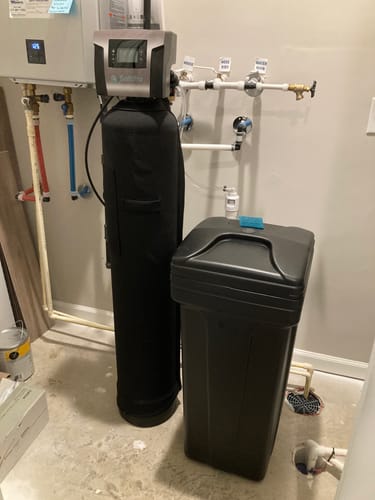
The entire installation took me about 30 minutes - significantly faster than the 2-3 hours I had budgeted based on the manual's estimates.
I started by shutting off power to our well pump and draining the pressure tank to eliminate any risk of water damage during the plumbing work. The installation point I chose was right after our pressure tank, before the main water line splits to feed different areas of the house.
The most time-consuming part was actually cutting into the existing copper line and installing the bypass valve assembly.
I used a standard pipe https://www.softprowatersystems.com/collections/iron-well-water-filters cutter and created clean, square cuts about 18 inches apart to accommodate the new fittings. The bypass valve system allows me to route water around the Iron Master for maintenance or emergencies - a feature I hoped I'd never need but was glad to have.
Connecting the SoftPro Valve to the tank required some careful attention to the control head orientation.
The manual emphasized making sure the air injection port faced the correct direction, and I double-checked this alignment several times before tightening the connections. The 1-inch NPT threads went together smoothly with pipe thread compound.
Plumbing the inlet and outlet connections was straightforward.
I used flexible stainless steel connectors to accommodate any minor misalignment and to make future service easier. The drain line connection required a 3/4-inch line with proper air gap - I ran this to our utility sink rather than trying to tie into existing drainage.
After completing all connections, I slowly opened the main water valve and checked every joint for leaks.
Everything stayed dry, which gave me confidence in the installation quality. I then initiated the startup sequence according to the manual: slowly filling the tank, purging air from the system, and running the first backwash cycle.
The initial backwash was impressively thorough, running clear water through the drain line for about 8 minutes to remove any manufacturing residue from the Katalox media.
Performance Results and Water Quality Transformation
The difference in our water quality was noticeable within 24 hours of installation, but the full transformation took about a week as the system optimized its operation.
I conducted before-and-after testing using both simple test strips and a digital iron meter I purchased specifically for this project.
Pre-treatment measurements consistently showed 4.2 ppm iron content with that characteristic metallic taste and slight orange tint when the water sat in a glass for a few minutes. Post-treatment results were remarkable: iron levels dropped to 0.1 ppm - well below the EPA's 0.3 ppm recommendation and completely eliminating the taste and staining issues.
The first real-world test came when I ran a load of white laundry that had been sitting in the hamper.
These were items that typically came out with faint orange discoloration despite using iron-fighting detergents. After washing with our newly treated water, they came out genuinely white - no staining, no residual iron smell, no need for special additives.
Our dishwasher performance improved dramatically.
Glasses that had developed a cloudy, spotted appearance from months of iron exposure started coming out crystal clear. We could finally taste the difference in our drinking water - it was clean, refreshing, and free of that metallic aftertaste that had become our unwelcome normal.
The bathroom fixtures showed improvement within days.
While existing stains required some cleaning to remove completely, no new orange discoloration appeared on the toilet, sink, or shower surfaces. Our daily cleaning routine became significantly easier without the constant battle against iron staining.
I also noticed improved performance from our water heater.
The unit had been making slight gurgling sounds that I now realize were probably caused by iron buildup. After a month of treated water, these sounds disappeared, suggesting the system was helping prevent further damage to our appliances.
Operating Costs and System Efficiency
One of my biggest concerns before purchase was the ongoing operational costs, so I tracked everything carefully during the first six months of ownership.
The air injection system operates without electricity for the oxidation process itself, but the SoftPro Valve requires power for its control functions and automatic backwash cycles.
I measured the electrical consumption using a kill-a-watt meter and found the system draws about 8 watts during normal operation, spiking to 15 watts during backwash cycles. This translates to roughly $3-4 per month in additional electricity costs at our local rates.
Water consumption during backwash cycles was initially a concern since we're on a private well.
The system uses approximately 100 gallons per backwash cycle, which occurs automatically every 3-4 days based on water usage. With our family of four, this represents about 800-1,000 gallons per month of additional water consumption - noticeable but not problematic for our well capacity.
The Katalox media doesn't require replacement under normal conditions, which eliminates the ongoing filter costs I was used to with sediment filters.
Instead, the media actually improves its iron removal efficiency over time as it develops a coating of captured iron particles that enhances its catalytic properties.
Comparing these costs to our previous situation reveals significant savings.
We eliminated our monthly spending on bottled drinking water ($60), reduced cleaning supply purchases by about half ($25), and stopped buying special iron-fighting laundry detergents ($15). The net result is that the Iron Master actually saves us about $65 per month compared to living with untreated iron water.
Over a 10-year period, factoring in the initial purchase price and operational costs, the total cost of ownership works out to about $0.08 per gallon of treated water - a fraction of what we were spending on bottled water alone.
Long-Term Experience and Final Assessment
After eight months of daily use, the Iron Master has exceeded my expectations in terms of reliability and consistent performance.
The system requires minimal attention once properly installed and programmed.
The SoftPro Valve's automatic operation handles all the backwash cycles based on water usage patterns, and I've never needed to manually intervene or adjust the programming.
Maintenance has been practically non-existent.
I check the system monthly to ensure the drain line is flowing freely and occasionally verify that the air injection is working properly by listening for the characteristic sound during the regeneration cycle. The LED indicators on the SoftPro Valve provide clear status information, and I've never seen any error codes or fault conditions.
The system's performance has remained consistent throughout our ownership period.
Iron removal efficiency hasn't declined, flow rate stays strong even during peak usage periods, and the automatic controls continue operating reliably. We've had no issues with iron breakthrough or reduced effectiveness.
Would I purchase the Iron Master again knowing what I know now?
Absolutely.
The combination of effective iron removal, low maintenance requirements, and reasonable operating costs makes it an excellent value for households dealing with iron contamination. The 30-minute installation process and DIY-friendly design saved us significant money compared to professionally installed alternatives.
For homeowners facing similar iron water challenges, especially those with iron levels between 2-10 ppm, the Iron Master offers a reliable, cost-effective solution that delivers on its performance promises without requiring ongoing chemical treatments or frequent media replacement.
The peace of mind that comes from having consistently clean, iron-free water throughout our home has been worth every penny of the investment.