
Hi, I'm Oliver Garrett. I live in Denver.
Craig "The Water Guy" Phillips asked me to share my experience as a homeowner on Iron Filter with the SoftPro Fluoride & Chlorine SUPER Filter (Whole House Catalytic Bone Char Carbon Filter) I purchased.
This is how my adventures played out. I hope this helps you in your decision.
Did you know that the average American household consumes over 300 gallons of water daily, yet most of us have no idea what's actually flowing through our pipes?
I certainly didn't until last year when I started noticing some concerning changes in our water quality. What began as a simple concern about taste evolved into a comprehensive research journey that led me to invest in the SoftPro Fluoride & Chlorine SUPER Filter.
After eight months of daily use, I'm sharing my complete experience – the good, the challenging, and everything in between. If you're considering a whole house filtration system and want an honest, detailed account from someone who's actually living with this technology, you're in the right place.
The Water Problems That Started Everything
Living in Denver, I thought our municipal water was pretty decent. Sure, it had that typical chlorine smell when you first turned on the tap, but doesn't everyone's? That assumption changed dramatically last spring when several things happened almost simultaneously.
First, my wife Sarah started complaining about her hair feeling "weird" after showers. She's always been particular about her hair care routine, but this was different – she described it as feeling stripped and dry despite using expensive conditioners. Initially, I chalked it up to seasonal changes or maybe a new product that didn't agree with her.
Then I started paying attention to our morning coffee ritual. As someone who takes their coffee seriously (perhaps too seriously, according to Sarah), I began noticing an off-taste that I couldn't quite place. It wasn't terrible, but it was definitely there – a subtle chemical undertone that seemed to intensify some days more than others.
The real wake-up call came when our six-year-old daughter Emma started refusing to drink water from the tap. Kids are often more sensitive to tastes and smells than adults, and she kept asking for "the water from bottles" instead of what came from our kitchen faucet.
Curious about what we were actually consuming, I purchased a basic water testing kit from our local hardware store. The results showed chlorine levels at 2.1 parts per million – within EPA acceptable limits, but on the higher end of the range. More concerning was detecting fluoride at 1.8 ppm, which got me researching the ongoing debates about fluoride in drinking water.
I also discovered that our area's water report mentioned occasional detections of chloramines, a more persistent disinfectant than chlorine that's harder to remove with basic filtration. This explained why letting water sit out overnight (my previous solution for chlorine taste) wasn't helping anymore.
The financial impact was starting to add up too. We'd begun purchasing bottled water for drinking and cooking, spending roughly $40-50 monthly. While researching filtration options, I realized we were potentially looking at $500-600 annually just for bottled water – money that could be invested in a permanent solution.
Research Phase: Understanding My Options
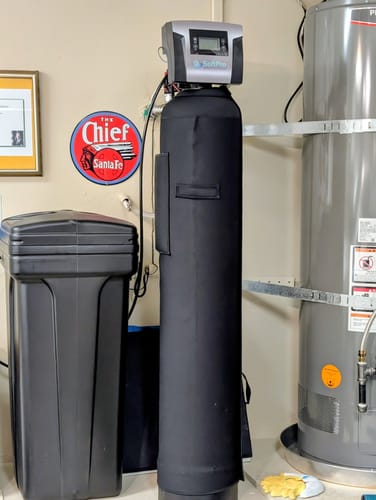
Once I committed to finding a proper filtration solution, I dove deep into research. As an engineer by training, I tend to over-analyze purchases, and this was no exception. I spent weeks reading studies, comparing technologies, and trying to understand the actual science behind water treatment.
My initial assumption was that a simple carbon filter would solve our chlorine issues. However, the more I learned, the more I realized how complex water treatment actually is. Standard activated carbon works well for chlorine and some organic compounds, but it's largely ineffective against fluoride and chloramines.
I discovered that removing fluoride requires either reverse osmosis, activated alumina, or bone char carbon filtration. Reverse osmosis seemed overkill for our needs and would require extensive plumbing modifications. Activated alumina systems looked promising but required frequent media replacement and careful pH monitoring.
Bone char carbon caught my attention because it naturally removes both fluoride and chlorine compounds while maintaining beneficial minerals that RO systems strip away. However, I learned that not all bone char is created equal – the activation process and source materials significantly impact effectiveness.
Catalytic carbon was another discovery. Unlike regular activated carbon, catalytic carbon is specially treated to break down chloramines through a process called catalytic reduction. This was crucial for our water supply since chloramines don't simply evaporate like chlorine.
I also researched system sizing, flow rates, and capacity calculations. Our household of four typically uses 250-300 gallons daily, with peak flow demands during morning routines. I needed a system that could handle 10-15 gallon-per-minute flow rates without significant pressure drops.
Certification became another key factor. I prioritized systems tested to NSF/ANSI standards, particularly NSF-42 for chlorine reduction and NSF-61 for materials safety. Many manufacturers make impressive claims, but third-party testing provides verification.
After comparing over a dozen systems, the SoftPro Fluoride & Chlorine SUPER Filter emerged as the best match for our specific needs. It combined catalytic carbon for chloramines with bone char for fluoride removal, offered appropriate flow rates for our household size, and came from a manufacturer with strong technical support reputation.
First Impressions and System Overview
The SoftPro system arrived in early June via freight delivery due to its size and weight. The main unit stands about 54 inches tall with a 10-inch diameter – significantly larger than I'd anticipated, even after reviewing the specifications. The bypass valve assembly and control head added another 8 inches to the overall height.
Unboxing revealed impressive build quality immediately. The fiberglass-reinforced tank felt substantial and included a 10-year warranty sticker. The Fleck 5600SXT control valve looked robust with a clear, easy-to-read display showing current time, gallons processed, and system status.
The system includes both catalytic carbon and bone char media in separate chambers within the tank. According to the technical documentation, the catalytic carbon handles chlorine, chloramines, and organic compounds in the top section, while bone char in the bottom section targets fluoride and provides additional carbon filtration.
Media capacity impressed me – 1.5 cubic feet of catalytic carbon and 0.5 cubic feet of bone char. Based on our water usage patterns and contaminant levels, SoftPro estimated 5-7 years before media replacement would be necessary. At roughly $300 for replacement media every six years, operational costs seemed reasonable.
The control head came pre-programmed for typical residential settings, but I appreciated the ability to adjust regeneration frequency, backwash duration, and flow rates based on our specific conditions. The programming manual was thorough without being overwhelming.
One pleasant surprise was the inclusion of a bypass valve assembly that allows isolating the system for maintenance without shutting off water to the entire house. This feature proved valuable during the initial setup and testing phases.
Installation Experience and Setup

I considered professional installation but ultimately decided on DIY to better understand the system and save the $400-500 installation fee. Having some plumbing experience helped, though this definitely pushed my skill level.
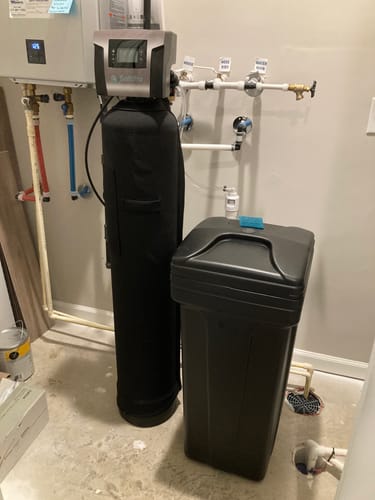
The installation location required careful consideration. The system needed to be after the main shutoff but before the water heater, with access to a drain for backwash cycles and electrical for the control valve. Our utility room provided adequate space, though I had to relocate some storage items.
Preparing the installation site took most of a Saturday morning. I installed a dedicated 20-amp electrical outlet, ran a drain top fluoride filter systems on the market line to our utility sink, and measured pipe runs to determine the fittings needed. The system requires 1-inch main line connections, which meant upgrading from our existing 3/4-inch pipes in that section.
The actual plumbing installation took about six hours over a weekend. Installing the bypass valve assembly required precise measurements to ensure proper alignment. I used shark bite fittings for most connections, which simplified the process but added about $80 to material costs.
Initial startup involved slowly filling the tank while monitoring for leaks, then running the first backwash cycle to settle the media and remove any dust from shipping. The control head automatically guided through this process, though I referenced the manual frequently to understand what was happening.
Programming the control head for our specific conditions required inputting our water hardness level (8 grains), estimated daily usage (280 gallons), and desired regeneration frequency. I initially set it for every 5 days but later adjusted to every 7 days based on actual usage patterns.
The first few days involved monitoring system operation closely, checking for leaks, and observing the backwash cycles. Each regeneration uses approximately 150 gallons and takes about 90 minutes. I scheduled these for 2:00 AM to minimize disruption to our daily routines.
Performance Results and Water Quality Improvement
The transformation in our water quality was noticeable within 24 hours of installation. The most immediate change was the complete elimination of chlorine odor – even when filling large pots for cooking, there was no chemical smell whatsoever.
To quantify the improvements, I tested our water before and after installation using both home test kits and professional lab analysis. Pre-filtration, our water showed 2.1 ppm chlorine and 1.8 ppm fluoride. Post-filtration tests revealed non-detectable chlorine levels and fluoride reduced to 0.3 ppm – a reduction of approximately 83%.
The taste improvement was dramatic and immediate. Our morning coffee tasted cleaner and more balanced, without the subtle chemical undertone I'd grown accustomed to. Sarah noticed the difference in tea as well – flavors seemed more distinct and natural.
Emma started drinking tap water again without any prompting, which was perhaps the most telling indicator of improvement. Children's taste sensitivity often reveals what adults have learned to tolerate.
Sarah's hair and skin improvements took about two weeks to become apparent. She reported her hair feeling softer and more manageable, requiring less conditioner to achieve the same results. My own skin felt less dry after showers, particularly during Colorado's arid winter months.
I also tracked our soap and detergent usage over several months. While this system doesn't soften water like a traditional water softener, the removal of chlorine and other chemicals seemed to improve cleaning efficiency. We reduced liquid soap usage by approximately 15% while achieving the same cleaning results.
Flow rate testing revealed minimal pressure loss. At our main bathroom shower, I measured 12 PSI before installation and 11 PSI after – essentially negligible for practical purposes. Even with multiple fixtures running simultaneously, we haven't experienced any pressure issues.
After eight months of operation, performance has remained consistent. Monthly test strips continue showing effective chlorine removal and fluoride reduction. The system hasn't required any adjustments or maintenance beyond the automatic backwash cycles.
Daily Life Impact and Practical Benefits
The most significant daily impact has been our complete transition away from bottled water. We now drink tap water confidently, use it for all cooking applications, and even Emma prefers it for mixing her powdered drinks.
Our monthly grocery bills decreased by approximately $45 from eliminating bottled water purchases. Over eight months, that's already saved us $360 – meaningful progress toward recovering the system cost.
Coffee and tea preparation improved noticeably. Sarah, who's particular about her morning Earl Grey, commented that the tea tastes "cleaner" and more authentic. I've been able to reduce coffee quantities slightly while maintaining the same flavor strength.
Ice cubes from our refrigerator dispenser taste significantly better since they're made with filtered water. Previously, ice had a slight chemical taste that was particularly noticeable in cold beverages.
Houseplants seem to appreciate the filtered water as well. While not scientifically measured, our indoor plants appear more vibrant since switching to filtered water for all watering. Chlorine can stress plants, so this improvement makes sense.
Cooking applications have been enhanced across the board. Pasta water doesn't have any off-flavors, soup stocks taste cleaner, and even simple applications like boiling eggs seem to yield better results.
One unexpected benefit was reduced cleaning requirements for our coffee maker and kettle. Previously, these appliances developed mineral buildup and required descaling every 6-8 weeks. While we still have hard water minerals, the removal of other compounds seems to have reduced overall buildup.
Guests frequently comment on our water quality without prompting. Several visitors have asked about our "water source" after drinking from our tap, assuming we had well water or special municipal supply.
Operational Costs and Maintenance Reality
Understanding the true cost of ownership was crucial for my decision-making process, and eight months of operation provides good baseline data for projecting long-term expenses.
The system regenerates every 7 days currently, using approximately 150 gallons per cycle. At Denver's current water rates ($3.89 per 1,000 gallons), each regeneration costs about $0.58 in water. Monthly water costs for system operation average around $2.50.
Electricity consumption is minimal but measurable. The control valve operates on a small transformer, consuming roughly 8 watts continuously. Monthly electrical costs add approximately $1.20 to our utility bill.
Media replacement represents the largest ongoing expense. Based on our usage patterns and SoftPro's recommendations, I'm budgeting for media replacement in year 6 or 7. Replacement media costs approximately $300 including shipping, which averages to $50 annually over the media lifespan.
Compared to our previous bottled water expenses of $45 monthly, the system pays for itself through operational savings. Total monthly operating costs (water, electricity, and media replacement reserve) equal roughly $8.50 versus $45 for bottled water.
I've tracked additional household savings as well. Reduced soap usage saves approximately $5 monthly, and eliminating bottled water storage freed up pantry space worth considering in our cost-benefit analysis.
No unexpected expenses have emerged during eight months of operation. The system has functioned exactly as designed without requiring service calls, additional parts, or troubleshooting beyond normal operation.
One consideration for future budgeting is potential utility rate increases. Both water and electricity costs have risen modestly over the past year, but these increases affect the bottled water alternative as well through increased transportation and production costs.
Honest Assessment: Limitations and Considerations
No system is perfect, and the SoftPro has some limitations worth understanding before making a purchase decision.
The most significant limitation is space requirements. This system demands considerable floor space and height clearance that many homes simply don't have available. Our utility room accommodates it well, but apartments or homes with limited utility space would struggle with installation.
Installation complexity shouldn't be underestimated. While I managed DIY installation, it required intermediate plumbing skills, electrical work, and careful planning. Many homeowners would need professional installation, adding $400-500 to the total investment.
The system doesn't address water hardness, which remains an issue in our area. We still experience mineral buildup on fixtures and appliances that a traditional water softener would prevent. For comprehensive water treatment, some households might need both systems.
Regeneration scheduling requires some household coordination. While I set backwash cycles for 2:00 AM, power outages reset the timer and occasionally cause regeneration during inconvenient times. The system suspends water flow during backwash, which can be problematic if someone needs water urgently.
Media replacement, while infrequent, represents a significant expense and moderately complex procedure. I'll need to drain the system, remove the control head, and replace media in both chambers. This isn't a simple filter cartridge change.
The system removes beneficial fluoride along with other compounds. While this was my intention, families who rely on fluoridated water for dental health should consider supplementation or alternative fluoride sources.
Initial water waste during regeneration cycles might concern environmentally conscious households. Each cycle uses 150 gallons, though this water typically goes to the drain system and can potentially be captured for irrigation if desired.
Finally, the upfront investment is substantial for many households. While operational savings justify the cost over time, the initial $1,200-1,500 expenditure (including installation) represents a significant budget commitment.